

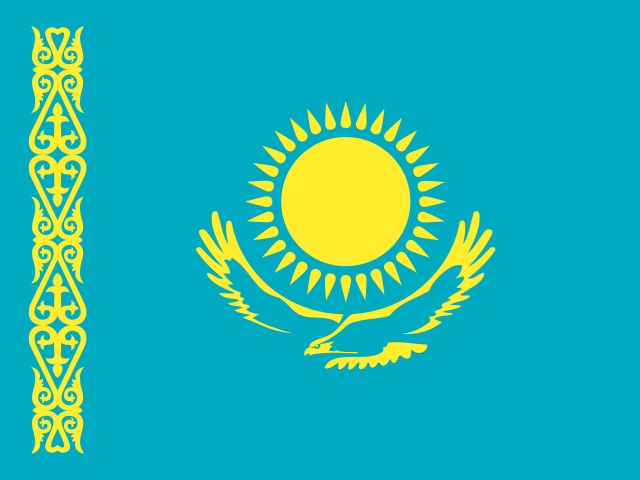
 Kazakhstan · Russia, the Caucasus and Central Asia
Kazakh Bitcoin Mining
Kazakhstan received substantial mining equipment during the 2021 migration and subsequently placed digital mining inside a licensing, accredited-pool, data-center and grid-dispatch framework. Mining is not blanket-banned, but the power system still has deficits and each project must verify its licensed entity, technical connection and ability to shed load.
- market stage
- Restricted
- Policy status
- Conditionally open
- Public sources
- 14
- Last updated
Three lenses before the details
These are navigation cues, not a profitability score or project recommendation.
A thermal-heavy national grid, natural gas, hydropower and renewables
Coal power · natural gas · hydropower
- System
- High barrier
- electricity
- difficult to obtain
- Imports
- The procedure is complicated
Primary risk watch
Licensing, mandatory pools, power quotas/load shedding and 2026 rule changes
Check out three future scenarios →Understand in one minute
First grasp the conditions for the establishment of this market, and then check the energy, policy, import and site details.
- 01
Digital mining is lawful but highly licensed; the low-barrier 2021 market no longer describes entry today.
- 02
A Kazakh sole proprietor or legal entity holds the compliance role under a three-year license.
- 03
Power access requires commercial metering, communications and automated load-shedding capability.
- 04
KEGOC reports 2025 consumption above generation, with cross-border supply closing the gap.
- 05
The 2026 framework still requires Type I/II licenses, a non-residential data center and an accredited pool; the oilfield off-grid mechanism remains future legislation.
The Past: How Mining Evolved
How policy, energy and large load conditions are formed step by step.
-
Machines arrived during the China migration
Kazakhstan absorbed substantial equipment. Cambridge data is retained only as historical migration context, not a current market-share estimate.
Source [1] -
Law, license lists and energy mechanisms changed together
The current law and June 2026 rules retain licensing, non-residential data centers and accredited pools. A July presidential decree calls for later legislation on off-grid oilfield generation, so it is not a current power right.
Source [2] [3] [8] [9]
Current situation: What is currently supporting the
Kazakhstan retains a licensed digital-mining industry, but no independently verifiable real-time national Bitcoin hashrate, online-machine or available-capacity statistic exists.
Source [2] [3] [4] [5] [8]- Type I covers a miner that owns or lawfully controls a data center; Type II covers miner-owned equipment placed in a data center.
- Data-center connection requires commercial metering, communications and load-shedding capability.
- National generation remained below consumption in 2025, with regional peak constraints and cross-border supply.
- Official miner and pool lists verify legal entities, not online equipment or capacity available to outside buyers.
- Main deployment areas
- Northern thermal-power and industrial nodes receive attention, while southern and western conditions differ; licensed site and connection records control the analysis.
- Primary Participant Types
- Type I/II licensed digital miners, data centers and accredited pools
- Mine type
- Industrial data centers, converted buildings and container sites, with metering and telemetry more important than appearance.
- Commercial power acquisition
- difficult to obtain
- ASIC import procedure
- The procedure is complicated
- Industry maturity
- Operationally experienced, but licensed and power-constrained.
Energy Model: Where does cheap electricity come from?
Kazakhstan's energy resources do not mean that mining power is available at every node. Generation remained thermal-heavy in 2025, while national and regional balances still required reinforcement.
Source [5] [6]- 01
KEGOC reports that thermal power plants produced about three quarters of national electricity in 2025.
- 02
National consumption exceeded generation that year, with the difference covered by Russian power-system supplies.
- 03
The Southern Zone experienced load shedding during the absolute peak, so national totals cannot replace regional and time-specific review.
- 04
The energy ministry plans additional 2026 capacity, but planned or newly commissioned capacity should not be counted early as mine supply.
Policy, Taxation and Import
Final check of policy content:. This section is a summary of research and does not replace local legal and tax advice.
Source [2] [3] [4] [7] [8]- 01Mining legality
- Digital mining may operate under the Digital Assets Law, licensing and power rules; unlicensed or non-compliant activity is not equivalent.
- 02Registration and Licensing
- A Kazakh sole proprietor or legal entity obtains a three-year Type I license for a lawfully controlled data center or a Type II license for its own equipment placed in a data center, and mines through an accredited pool.
- 03power restrictions
- Sites require commercial metering, communications and controllable load; dispatch, regional balance and technical connection terms apply.
- 04ASIC import
- ASICs, transformers and parts require EAEU/Kazakh customs, conformity, origin and shipment-level review.
- 05tax
- Company, electricity consumption, mining income and asset disposal can have separate tax treatment; rates require current entity and power-source review.
- 06Foreign exchange and settlement
- Asset sales, fiat settlement and cross-border transfers remain subject to digital-asset, financial and FX rules.
- 07Foreign investment restrictions
- Foreign participants generally need a Kazakh entity linked to the local license and data-center responsibility chain.
- 08Asset exit
- Ownership, site debt, customs and re-export records govern removal, with long inland routes adding time.
Major Policy and Energy Developments
Only events that can materially change mining operations, hosting terms or equipment-exit decisions are included.
-
Strategic digital-mining rules take effect
Kazakhstan established a voluntary application and quota mechanism for strategic digital mining. Approved miners may operate within an allocated power quota and must transfer part of the digital assets mined to a designated fund for the national strategic crypto-asset reserve. This specific regime does not replace general mining-license and electricity rules.
Impact on Hosting DecisionsSource [11] [12]A host claiming access to a strategic quota should provide the approval, power contract, quota scope and asset-transfer arrangement. The new regime does not mean every mine can obtain protected power supply.
-
Presidential decree sets a path for oilfield off-grid generation serving digital mining
Kazakhstan's presidential decree directs work on autonomous generation using associated petroleum gas and natural gas at oil and gas fields, with power potentially available to digital mining when it is not required for state needs. Official material says implementation still depends on an action plan and follow-up legislation.
Impact on Hosting DecisionsSource [9] [10]This is a policy direction, not an immediately available power entitlement. A project still needs separate checks on implementing rules, gas supply, generation approvals, mining licenses, actual site status and equipment exit before planned capacity can be treated as usable.
-
Law No. 320-VIII changes electricity arrangements for data centres and digital miners
Kazakhstan adopted amendments concerning the telecommunications and data-centre market, including changes to electricity-purchase and generator-supply arrangements available to digital miners. The relevant provisions take effect after the statutory period, while implementing details and available capacity still require separate verification.
Impact on Hosting DecisionsSource [13] [14]Enactment does not mean power is already available to a hosting site. Verify the effective date, applicable purchase route, generator eligibility, grid conditions and mining license.
Mine operating conditions
In addition to electricity prices, on-site conditions really affect the online rate, maintenance cycle and transition costs.
- Temperature and humidity
- Winter cold helps cooling, while extreme cold, condensation and seasonal grid peaks add engineering and outage risk.
- Dust and cooling
- Steppe, industrial and coal environments can increase dust load, requiring checks of filters, airflow and cleaning cycles.
- Connectivity
- Sites need both power telemetry and pool connectivity; remote nodes should have multiple communications routes.
- Repair and parts
- Past mining activity supports repair experience, while imported parts, firmware and warranty work can still take longer.
- Transport and security
- Long overland routes, winter roads, storage and site access control affect delivery.
- Relocation
- Serial audits, the licensed entity, customs records and site arrears jointly determine whether equipment can move promptly.
Can individuals and small operators participate lawfully?
Low: only qualifying sole proprietors or Kazakh entities can operate within the license, data-center and accredited-pool system.
This section evaluates only national rules, electricity-market structure and public regulations. Hosting-provider prices, minimum quantities and service terms are excluded.
- Legality of Individual Self-Mining
- Ordinary residential activity is not a compliant commercial route; lawful entities are sole proprietors or Kazakh companies.
- Company and Business Registration
- A three-year Type I or Type II digital-mining license is required.
- Commercial Power Access
- Connection requirements include quota, metering, communications and automated load shedding.
- Small-Scale Residential Mining
- Digital-mining data centers must be outside residential areas.
- Self-Generation or Co-Located Generation
- Off-grid generation may be studied; the 2026 oilfield mechanism still requires legislation.
- ASIC import
- Imports require equipment registration, classification and tax records.
- Pools and Cross-Border Payouts
- Lawful mining runs through an accredited digital-mining pool.
- Foreign Participation
- Foreign investors need a Kazakh entity and compliant licensing structure.
- Equipment Exit
- Equipment registration, tax, ownership and export records shape exit.
- Institutional Transparency
- Law, eGov services, license lists, KEGOC and energy-ministry data are public.
The future is not a single path
Use three scenarios to track energy, policy and operational variables without writing forecasts as definite answers.
Gradually evolve
Licensed sites continue under controllable-load and grid constraints; new projects depend on connection quotas and generation additions.
Improved conditions
New generation, telemetry and public license lists improve transparency; oilfield generation adds capacity only if later legislation is enacted.
pressure rises
Power gaps, dispatch, licensing or cross-border logistics leave equipment offline or delay exit.
From small self-operated to large-scale mining, who can get in?
Kazakhstan's lawful route centers on licensed entities, non-residential data centers and accredited pools—not a plug-and-play retail market.
Source [2] [3] [4] [8] [5]Small self-mining
A lawful subject must meet local entrepreneur or company requirements; residential plug-and-play is not the policy model.
Mid-sized facility
Type I/II licensing, data-center, power and accredited-pool rules shape the structure.
Large mine
A licensed market exists, while the power balance and connection rules limit growth; a list does not prove online capacity.
Industrial power, legacy data-center assets and a defined license system keep compliant firms operating after the market shifted from free expansion to controlled capacity.
Government lists licensed miners and pools, not retail-hosting capacity, minimum scale or live equipment status.
- Local legal entity, license type, power allocation and accredited pool
- ASIC imports, tax, FX and equipment title
- Physical site, serials, removal and cross-border exit
This describes the market structure at the country level and does not represent any host recommendation, availability, price or service commitment.
Source
Public research and JGM field records are deliberately separated to prevent a single cooperation or service relationship from affecting the neutral judgment of the country page.
Open research sources
The country text, comparison tags, policy and energy analysis above only use this set of sources.
- 01
Cambridge Bitcoin Mining Map
Cambridge Centre for Alternative Finance
It is only used to understand the historical position of hashrate migration in 2021, and is not used as today's real-time proportion. (View: 2026-07-23) - 02
Law of the Republic of Kazakhstan on Digital Assets
Adilet Legal Information System · 2023-02-06
Included in the 2025–2026 revised legal basis for digital mining entities, certified mining pools, data centers outside residential areas and Class I/II licenses. (View: 2026-07-23) - 03
Rules for issuing digital mining activity licenses
Adilet Legal Information System · 2023-04-28
The current licensing process and qualification requirements; the amendments on 2026-06-02 and the effective provisions on 2026-07-12 have been checked. (View: 2026-07-23) - 04
Rules for connecting digital mining data centres to electric networks
Adilet Legal Information System · 2023-07-25
Technical requirements for power connection such as commercial automatic metering, communication integration and load shedding. (View: 2026-07-23) - 05
National Power System of Kazakhstan — 2025 balance
KEGOC · 2026
System operational data on generation, consumption, energy mix, regional peaks and cross-border power flows in 2025. (View: 2026-07-23) - 06
Electricity generation in Kazakhstan in the first half of 2026
Ministry of Energy of the Republic of Kazakhstan · 2026-07-14
Power generation in the first half of 2026 and new capacity plans for the full year; planned capacity is not regarded as available capacity. (View: 2026-07-23) - 07
Digital mining activity license service
eGov.kz
Class I/II licenses, competent authorities, application results and official service procedures. (View: 2026-07-23) - 08
Digital assets industry — licensed miners and accredited pools
Ministry of Artificial Intelligence and Digital Development of Kazakhstan
Entrance to the list of licensed miners and certified mining pools in 2026; the list does not represent online equipment or sellable capacity. (View: 2026-07-23) - 09
Measures to stimulate and develop the digital-assets industry
Adilet Legal Information System · 2026-07-07
The presidential decree directs follow-up work on oilfield off-grid generation for mining; it is an action-plan and legislative task, not a current connection right. (Accessed: 2026-08-09) - 10
President Signs Decree on Measures to Stimulate and Develop the Digital Assets Industry
Ministry of Artificial Intelligence and Digital Development of Kazakhstan · 2026-07-08
The official summary describes autonomous generation from associated petroleum gas and natural gas for potential digital-mining use when state needs are not affected; an action plan and follow-up rules are still required. (Accessed: 2026-08-09) - 11
Rules for strategic digital mining — Government Resolution No. 638
Adilet Legal Information System · 2026-07-18
The voluntary strategic digital mining system takes effect on 2026-07-31; including qualifications, quotas, direct power purchase, costs and national strategic encryption reserve transfer obligations. (View: 2026-08-09) - 12
Kazakhstan establishes rules for strategic digital mining
Ministry of Artificial Intelligence and Digital Development of Kazakhstan · 2026-07-31
The official summary is used to check the effectiveness and application boundaries of the system; it is only applicable to approved strategic projects and does not represent universal access to fixed electricity across the country. (View: 2026-08-09) - 13
Law No. 320-VIII:electricity-sector amendments
Adilet Legal Information System · 2026-06-19
The passed amendment to the electricity law includes a 70/30 arrangement for power plant expansion and new capacity to be directly supplied to large users; as of the date of verification, the relevant provisions have not yet come into effect. (View: 2026-08-09) - 14
New model for direct power supply to energy-intensive industries
Ministry of Artificial Intelligence and Digital Development of Kazakhstan · 2026-06-19
The official explanation is that the new capacity model that large users and digital miners can participate in does not equal the existing power plant capacity or the national electricity price commitment. (View: 2026-08-09)
Update record
Added major policy and energy developments, separated from JGM Learn's editorial update history.
Deep review of 2026 law, June licensing rules, public license lists and pending oilfield-generation legislation.
Initial publication with licensing, accredited pools, controllable-load connection rules and the latest power balance.
Do not use national averages in place of project conditions
Return to the Country Comparison and Policy page, first look at institutional thresholds, commercial power and ASIC imports, and then check actual sites, contracts and equipment withdrawals.