
United States
North AmericaDiverse grids, demand response, gas, wind, solar and hydro
- policy
- Conditionally open
- institutional threshold
- Conditional
- commercial electricity
- Need coordination
- ASIC import
- Smoother


From the migration of hashrate in China and the capitalization of North America to hydropower in South America, emerging mines in Africa and energy transformation in the Middle East, understand why global BTC hashrate is concentrated in these countries.
The background is a schematic diagram of an AI scenario and does not represent the actual scene of a specific mine or country.
Move from global estimates to project-level evidence while preserving the boundary between public data, research interpretation and field records.
Understand the estimated distribution, but do not mistake model estimates for official statistics or real-time measurements.
Use seven regional systems for context, then examine why countries in the same region still differ.
Compare system openness, commercial-power access and ASIC-import processes on one scale.
Review national rules, operating conditions, source dates and separately labeled field appendices.
Start with Hashrate Index's published Q4 2026 top-ten estimate, then open a completed country file for energy, policy and deployment conditions.
Based on a ~940 EH/s 30-day average. These are the previous quarter’s estimates, not current network measurements.
Within the same region, countries' power grid, import, tax and asset exit conditions may still be completely different.
 01
One of the mature markets with the largest concentration of listed mining companies, third-party hosting, grid demand response and large data centers.
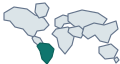 02
Hydropower, wind and solar surplus and cross-border energy coexist. Paraguay and Brazil are currently the two most worthy of separate study.
 03
Low-temperature, hydropower, wind power and thermal energy recovery conditions are outstanding, but electricity prices, taxation and environmental requirements are usually more stringent.
 04
Industrial power, cold climate, hydropower and natural gas underpin a mature mining ecosystem that now requires tracking registration, power curtailments and operating conditions on a zone-by-zone basis.
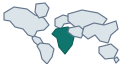 05
The commissioning of hydropower and new power generation brings new opportunities, but power grids, foreign exchange, logistics, communications and people's electricity consumption still need to be evaluated together.
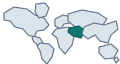 06
Big energy and sovereign capital can drive infrastructure, but heat, cooling and national-level policies are barriers to entry.
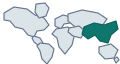 07
From Chinese supply chains and bans, to Bhutan hydropower, to power grids and policy differences in South and Southeast Asia, there is no single Asian model.
Selecting a question will directly apply the comparison conditions; the results only represent the country data that has been completed so far.
Use system openness, commercial power acquisition and ASIC import procedures to make decisions first; leave the complete background on the country page and do not stuff research notes into the comparison table.
| nation | energy | policy | institutional thresholdLook at the openness | commercial electricitySee how difficult it is to get | ASIC importLook at the difficulty of the program |
|---|---|---|---|---|---|
| United StatesNorth America→ | Conditionally open | Conditional | Need coordination | Smoother | |
 South AfricaAfrica→ | Conditionally open | Conditional | Need coordination | Documents required | |
 GeorgiaRussia, the Caucasus and Central Asia→ | Conditionally open | Conditional | Need coordination | Documents required | |
 BrazilSouth America→ | Conditionally open | High barrier | Need coordination | The procedure is complicated | |
 IndonesiaAsia→ | Unclear | High barrier | Need coordination | The procedure is complicated | |
 ArgentinaSouth America→ | Conditionally open | Conditional | Need coordination | The procedure is complicated | |
 CanadaNorth America→ | Conditionally open | Conditional | difficult to obtain | Smoother | |
 ParaguaySouth America→ | Conditionally open | Conditional | difficult to obtain | Documents required | |
 OmanMiddle East→ | Conditionally open | High barrier | difficult to obtain | Documents required | |
 EthiopiaAfrica→ | Unclear | High barrier | difficult to obtain | The procedure is complicated | |
 RussiaRussia, the Caucasus and Central Asia→ | Conditionally open | High barrier | difficult to obtain | The procedure is complicated | |
 KazakhstanRussia, the Caucasus and Central Asia→ | Conditionally open | High barrier | difficult to obtain | The procedure is complicated |
There are currently no published countries matching this set of criteria; clear a filter and try again.
The list is generated directly from the update date of national data and is not manually maintained.
Added a major policy and energy developments section with explicit event status, hosting impact and public sources.
Added a major policy and energy developments section with explicit event status, hosting impact and public sources.
Rechecked September operator disclosures; consolidated the profile around supply, billing and equipment exit; retained historical JGM records separately.
Added a major policy and energy developments section with explicit event status, hosting impact and public sources.
Added a major policy and energy developments section with explicit event status, hosting impact and public sources.
Added a major policy and energy developments section with explicit event status, hosting impact and public sources.
The distribution of global hashrate is difficult to observe instantly and completely. This database would rather leave "no reliable public data yet" than package outdated estimates into current status.
Priority will be given to quoting announcements and original documents from governments, power grids, regulatory agencies, and listed companies. The date of review and source links will be retained at the bottom of the country page.
It will only be displayed when it is confirmed that there is original information from inspections, operators or partners, and will be marked separately. It will not be inferred from public news.
The Hashrate Index's country-by-country numbers are weighted estimates that combine mining pool data, ASIC transaction flows, and firmware adoption trends. They are not official statistics or real-time measurements. Please match Q4 2026 source publicationread.