

If you stop for 10 minutes first, you may save money on a miner.
Mining scams don’t necessarily look crude. Fake websites, real mining videos, small withdrawals, and group word-of-mouth may just put you off checking. First find out the scenario you encountered, and then verify it one by one according to the stopping points.
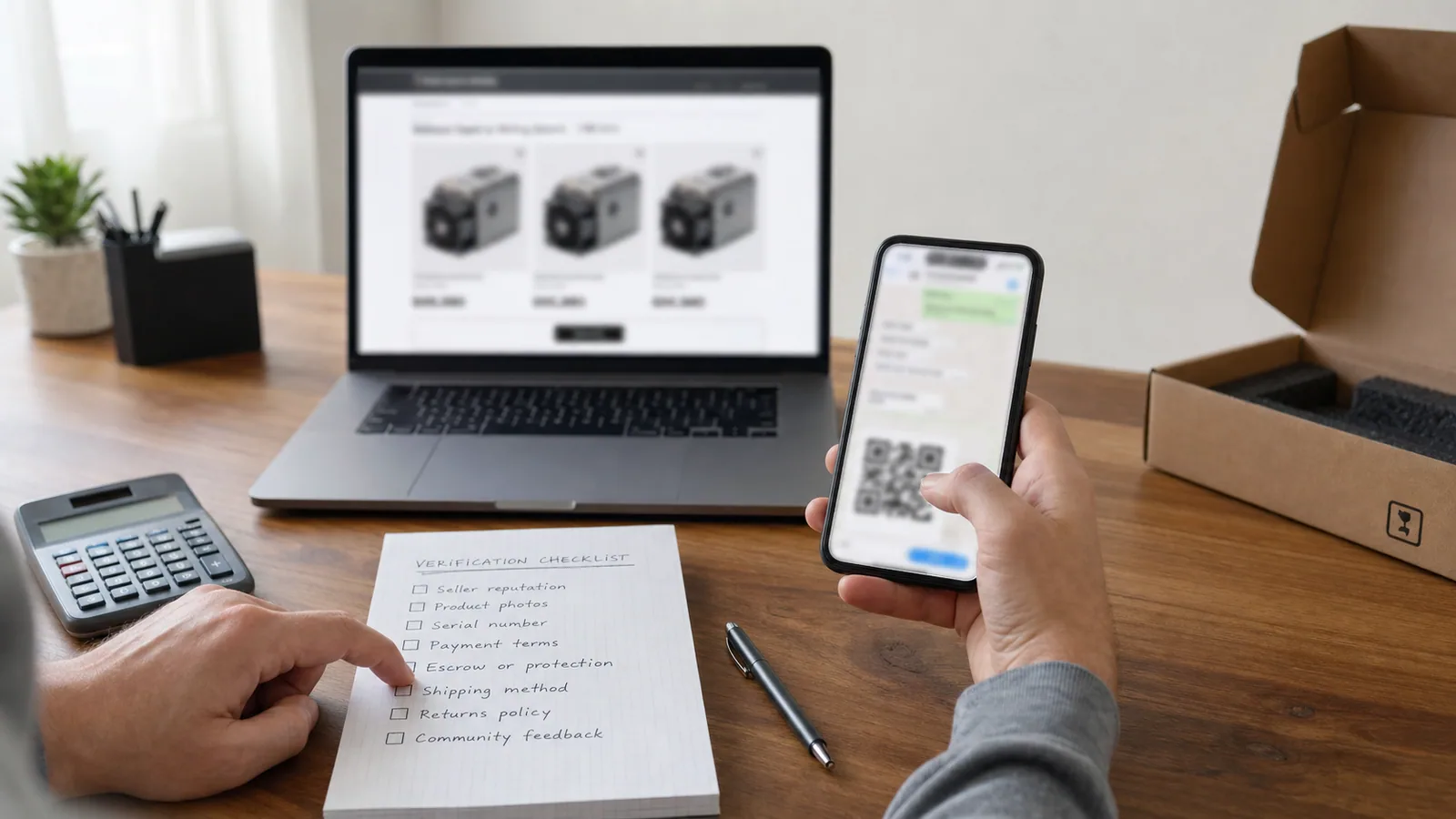
The payment instrument, service level or document form alone cannot prove fraud; the key point is whether the identity, equipment, hashrate and delivery can be independently verified.
Which one are you experiencing now?
Each page is broken down in the order of contact, fetching, urging and stuck assets, and lists where you can stop.
Fake miner seller
Use stolen pictures, fake inventory or counterfeit brand official websites to create the illusion of spot goods; after the miners take action, they will only leave fake order numbers, repeatedly make additional requests, or lose contact directly.
"The last 3 units available today are 25% cheaper than the market. Order now and reserve them."
Fake mine hosting
Use other people's mine videos, fake surveillance panels, or short-term real hashrate to build trust; when the equipment is in place or the scale is expanded, start delaying listing, returns, and retrieval.
"The venue has been powered on. All we need now is your machines to guarantee a 98% online rate."
Cloud hashrate and fixed returns
Packaging mining into a daily fixed income: you can’t see the equipment, electricity, mining pools and real output, only the platform’s background numbers, recommendation bonuses and continuous additions.
"It is fixed at 1.2% every day, and the capital is paid back in 30 days. The mining farm and AI hashrate jointly guarantee the income."
Fake mining pools and phishing logins
Fake mining pool domains or customer service, claiming that there is an abnormality in the account, address or settlement, and guiding you to click on a link and enter a password, API key or wallet mnemonic phrase.
"Your mining pool account is abnormal. If it is not verified within two hours, settlement will be stopped."
Malicious firmware and fake repairs
In the name of increasing hashrate, unlocking frequency or free maintenance, it is required to install unknown firmware or remote control; the consequences may be to change the mining pool, steal accounts, implant backdoors or damage the equipment.
"This special firmware can increase hashrate by 20% for free. I will help you get the fastest speed remotely."
Fake dating and liquidity mining
The other party described DeFi liquidity mining as Bitcoin miner mining. It first establishes emotional or professional trust, and then guides the wallet to connect to the malicious DApp and authorize the transfer of assets.
"I also do mining. You don't need to buy a machine. You can earn 1% every day and the money is always in your own wallet."
Withdrawal fees and secondary fraud
The platform first uses taxes, margins, credit points or anti-money laundering fees to block withdrawals; after the victim is victimized, someone pretends to be a lawyer, hacker or law enforcement agency to collect recovery fees.
"Your income has been approved, only 8% tax is missing. All will be credited within ten minutes after payment."
Second-hand mobile phones and fake guarantees
The video of the test machine seen by the buyer may not be the one, the guarantee account number may be fake, and the logistics page may be copied. It is common to receive a machine that does not meet the specifications, a faulty machine, or no goods at all after payment.
"The group administrator can guarantee that the money will be released after you inspect the goods."
The names will change, and the order of advancement is often very similar.
You don’t have to wait until the other person disappears to confirm. The sooner you disconnect in the process, the more damage you can control.
- 📣01find you
Ads, groups, private messages or referrals from acquaintances
- 🧑💼02gain trust
Stolen pictures, fake identities, fake profits and small-amount tests
- ⏳03create pressure
Limited time, limited quantity, frozen or missing the market
- 💸04ask you to act
Remittance, wallet authorization, remote permissions or sending device
- 🔒05stuck assets
Fake logistics, delayed listing, refusal to withdraw money, or equipment out of control
- 🪤06Collect again
Taxes, unfreezing fees, security deposits or recovery services
Preserve the evidence first, don’t make the “last payment”
The sooner you contact the bank, exchange, wallet service or guarantee platform that actually handled the funds, the better your chance of flagging the address or blocking the pending payment. For cross-border miner and mine farm cases, subsequent judgments should be based on the capital path, counterparty, platform and asset location, and no single country's processing procedures are preset.
- 1Stop appendingTaxes, unfreezing, security deposits and recovery fees are all stopped first.
- 2Save original dataURL, account ID, wallet address, TXID, email and full chat.
- 3Contact the payerThe earlier the bank, exchange, credit card or guarantee platform is notified, the better.
- 4Judgment processing pipelineChoose the appropriate legal or professional assistance based on the payment platform, counterparty and asset location.