

After Buying a Generator: Delivery, Maintenance and Local Service
Miners need more than “the equipment reached port”: establish contractual delivery and who handles downtime. Check receipt, acceptance, warranty and service capability separately.
This guide organizes questions and explanations to request. It endorses no vendor and does not generalize one region’s programme experiences to all projects.
First published:(Taipei)
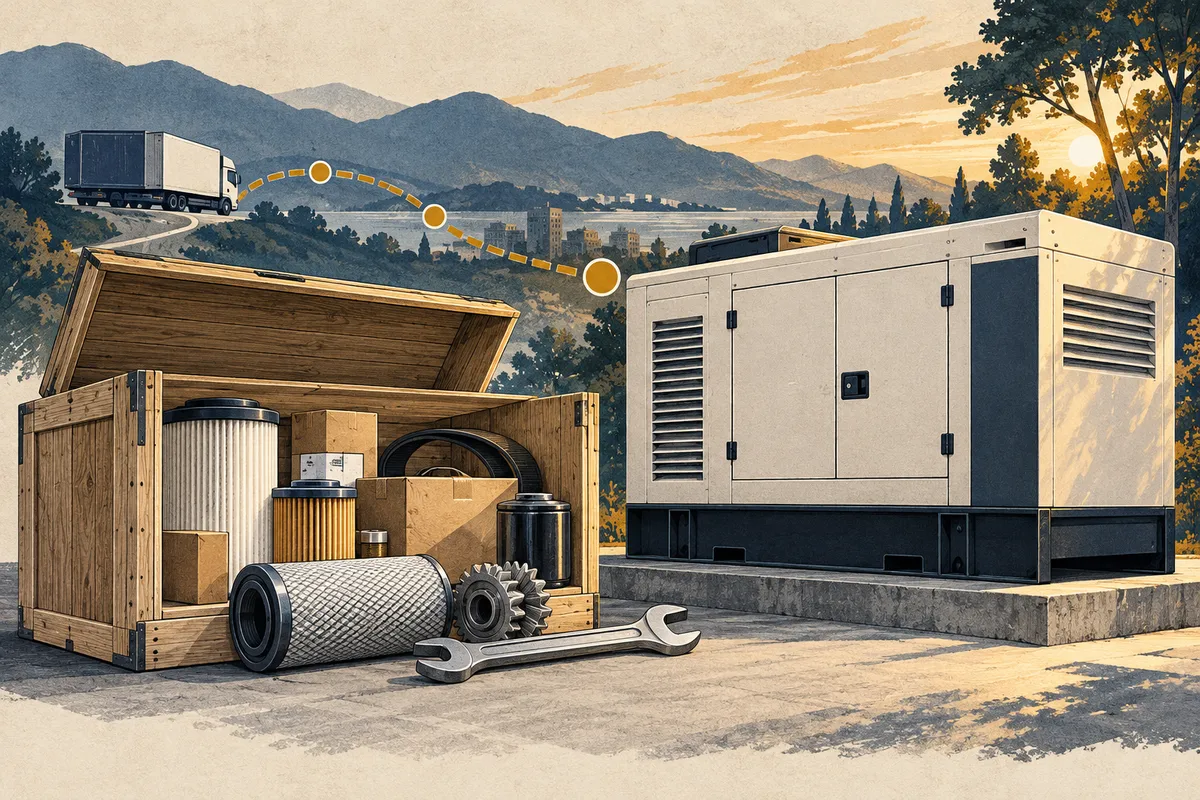
Break delivery into verifiable milestones
These milestones identify scope to clarify, not acceptance standards for your project. Qualified personnel and the contracting parties must establish required testing, witnessing and sign-off.
| Milestone | Question | Request |
|---|---|---|
| Supply and transport | What model, accessories and delivery point? Who handles transit damage, clearance and unloading? | Packing list, serial numbers, receipt records and responsibilities |
| Installation and commissioning | Does the quote include local installation, commissioning and supporting equipment? | Scope, local provider, completion records and outstanding items |
| Acceptance | Which specification version, fuel and site conditions apply? | Agreed basis, witnesses, records and handling of exceptions |
| Handover to operations | Who takes over monitoring, maintenance, safety management and fault reporting? | Manuals, training and handover records, service contacts |
Warranty and maintenance are different
Cummins’ 2018 CDUC document covers its listed models and distinguishes warranty commencement, supplier and owner responsibilities, and exclusions. It is a historical example of contract structure, not today’s quote or assurance that all Cummins models or cross-border service share those terms. Cummins: 2018 CDUC warranty example for listed models, pages 3–5 ↗
Request the warranty applicable to this model, region and contracting entity. Does it start at shipment, receipt or startup? How do time and running-hour limits work? Who pays for parts, labour, travel and consumables? What happens with unsuitable fuel or missing maintenance records? “Global warranty” is not an answer to these questions.
EPA treats routine servicing and overhauls as operating needs and distinguishes in-house from contracted maintenance. Request the exact model’s schedule, consumables and planned downtime instead of copying intervals or costs from the old catalog. EPA: reciprocating engines, maintenance, fuels and availability ↗
Beyond a phone response: who can attend the site?
The service provider should substantiate the answers below. Mark unsupported items as unconfirmed; remote monitoring does not establish local technicians or inventory.
- People: are qualified personnel available locally, from which company and location, with what language and coverage?
- Response: distinguish acknowledgement, remote diagnosis, attendance and restoration commitments, exceptions and extra charges.
- Spares: which are stocked locally and which imported? Establish lead-time evidence, substitute approval and inventory responsibility.
- Support: what can be done remotely and what requires attendance? How are communication failures and handovers handled?
- Downtime: distinguish fuel, supporting equipment, generator and load faults; establish record ownership and the applicable cost or compensation terms.
Programme experience prompts questions, not proof
Episode two discusses taking gas-generation equipment overseas, the US market, delivery and local service. It provides context for these questions, not Learn testing or universal technical findings. Establish a vendor’s actual performance from its delivery, warranty and service records. The viewing link retains the original episode route without guessed highlight timestamps.
Prepared by Learn Editorial to help miners understand information and question suppliers. This is not engineering design, operating instructions, a generator-selection guarantee, a compliance conclusion or an earnings promise. It does not claim Learn generation experience or expert review. A specific site still needs qualified local engineering and service assessment.
Editorial references and updates
Learn explains foundational concepts in its own editorial wording. References below remain available for verification; manufacturer-specific conditions are cited beside the relevant claim. These records do not imply Learn testing or engineering endorsement.
Sources accessed on 2026-10-31 (Taipei). EIA explains US energy fundamentals, not every country’s gas-quality or interconnection rules. The 2015 EPA combined heat and power (CHP) catalog is used for concepts and maintenance categories, not current prices. Manufacturer documents support only their stated products and conditions, not all equipment. Use the content-policy page to report corrections; revisions retain an update date. Citations and corrections ↗
Continue reading and watching
- How to Read a Gas-Power Quote: Costs and Conditions to Clarify
Check fuel, net output, maintenance and outage boundaries before comparing quotes.
- How to check overseas mining hosting
Connect generator-service questions to hosting responsibilities, evidence and exit terms.
- Episode 2: gas-generation equipment overseas and delivery
Hear delivery and local-service experiences, then verify terms with your own supplier.