

Is ZEC Mining Profitable? Running a Miner Versus Buying One
An owned Z15 may leave a surplus after electricity and be worth running. Buying that same machine today adds a different question: can the surplus justify the purchase, deployment and future repairs? The same earnings table can lead to different answers.
We separate those accounts using one Z15. All earnings, electricity and purchase amounts below are teaching assumptions, not current market data or available hosting quotes. Manufacturer documents checked on 2026-09-21.
Start with what remains each day
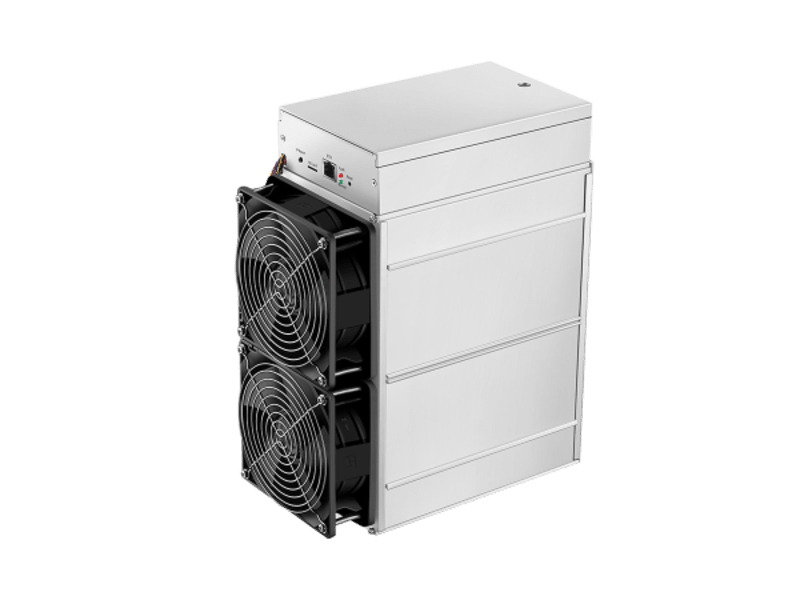
The example uses the Z15’s typical 420 KSol/s and 1,510W wall power at 25°C (power tolerance ±5%). Assume full-output production of 0.04 ZEC/day before a 3% pool fee, a $200 ZEC price, and 95% effective output. 0.04 × 97% × 95% = 0.03686 ZEC, worth $7.37. Fees and output reduction are applied once. BITMAIN Z15 specifications ↗
At an assumed $0.08/kWh, electricity is conservatively charged for all 24 hours: 1.51 × 24 × 0.08 = $2.90. A 95% output factor does not automatically reduce electricity charges by 5%. Adjust for measured downtime or contractual credits where applicable. No extra line loss is added; do not add it again if metered consumption already includes it.
| Item | Amount and basis |
|---|---|
| Value of credited output | 0.03686 ZEC × 200=$7.37 |
| Electricity | 36.24 kWh × 0.08=$2.90 |
| Surplus after electricity | $7.37 − $2.90=$4.47 |
| Other paid operating costs | Assumed $0.30/day allocation |
| Operating cash surplus | $4.47 − $0.30=$4.17 |
Other costs may be actual repairs or separately billed services; include only what applies. This does not assume every host charges a management fee. The $4.17 excludes equipment purchase, depreciation, resale value and applicable taxes, so it is not total investment profit. Unsold ZEC is a valuation, while electricity still requires cash.
Small changes in power cost or output change the decision
Keep the same machine and change one input at a time. A 40% output reduction is a scenario, not a difficulty forecast.
| Scenario | Daily result |
|---|---|
| Base case | $4.17 |
| Electricity rises to $0.12/kWh | Electricity $4.35; surplus $2.72 |
| Full-output production falls 40% | Revenue $4.42; surplus $1.22 |
| Scenario ZEC price falls to $80 | Revenue $2.95; surplus −$0.25 |
An existing owner should compare future operating surplus with costs that would actually stop after shutdown. The last row barely covers electricity but not the example’s other operating costs: that is the difference between surplus after electricity and operating cash surplus.
A new purchase adds upfront spending and waiting
Assume a $1,500 machine plus $150 shipping and setup: $1,650 before operation. A separate $100 refundable deposit raises required cash to $1,750 but should be tracked separately under its refund terms, not treated as a spent cost. Record repairs when incurred; do not count a repair reserve again as an actual payment.
If the daily surplus stayed at the example’s unrounded $4.1728, $1,650 takes about 395 operating days to recover. A $2,500 machine plus the same setup cost takes about 635 days. This is static arithmetic from deployment, not a promised payback date. Two weeks awaiting delivery generate no output from this machine, and price, difficulty and machine condition may differ on arrival.
The original purchase price matters when reviewing an owner’s whole investment. Today’s operating choice compares future receipts, avoidable costs and the option to sell. A new buyer must also assess new capital, delivery time, repair terms and resale value, rather than relying on a positive daily figure alone.
Apply your own Z15 or Z15 Pro conditions
The manufacturer’s 240-Z manual, page 7, lists 840 KSol/s and 2,650W wall power at 25°C (±10%). Its support page lists 2,780W (±5%) for the same model. Both documents remain available; there is insufficient evidence to assign the difference to specific batches. Confirm the delivered unit, measured power and billing agreement. Z15 Pro manufacturer manual, page 7 ↗Z15 Pro support specifications ↗
Learn’s Z15 and Z15 Pro pages include a ZEC estimator using KSol/s. Quick estimates show theoretical earnings after power; switch to operating conditions for pool fees, uptime and actual costs. Default power is a cited specification, not a meter reading. Enter your own ZEC electricity, losses and additional costs; no BTC partner terms are applied here. Z15: ZEC earnings estimator ↗Z15 Pro: ZEC earnings estimator ↗
After estimating daily surplus, check when the pool pays accumulated ZEC to your chosen address. ZEC pools and your first payout ↗Zcash network and equipment ↗