

CPU, GPU and FPGA: Everyone can mine the early days
Bitcoin clients in 2009 could mine directly with the CPU; GPUs later took over with higher parallel computing capabilities, and FPGAs provided the transition between power consumption and specialization. These three stages established the basic logic of the subsequent ASIC competition: who can calculate more hashes with the same kilowatt-hour of electricity.
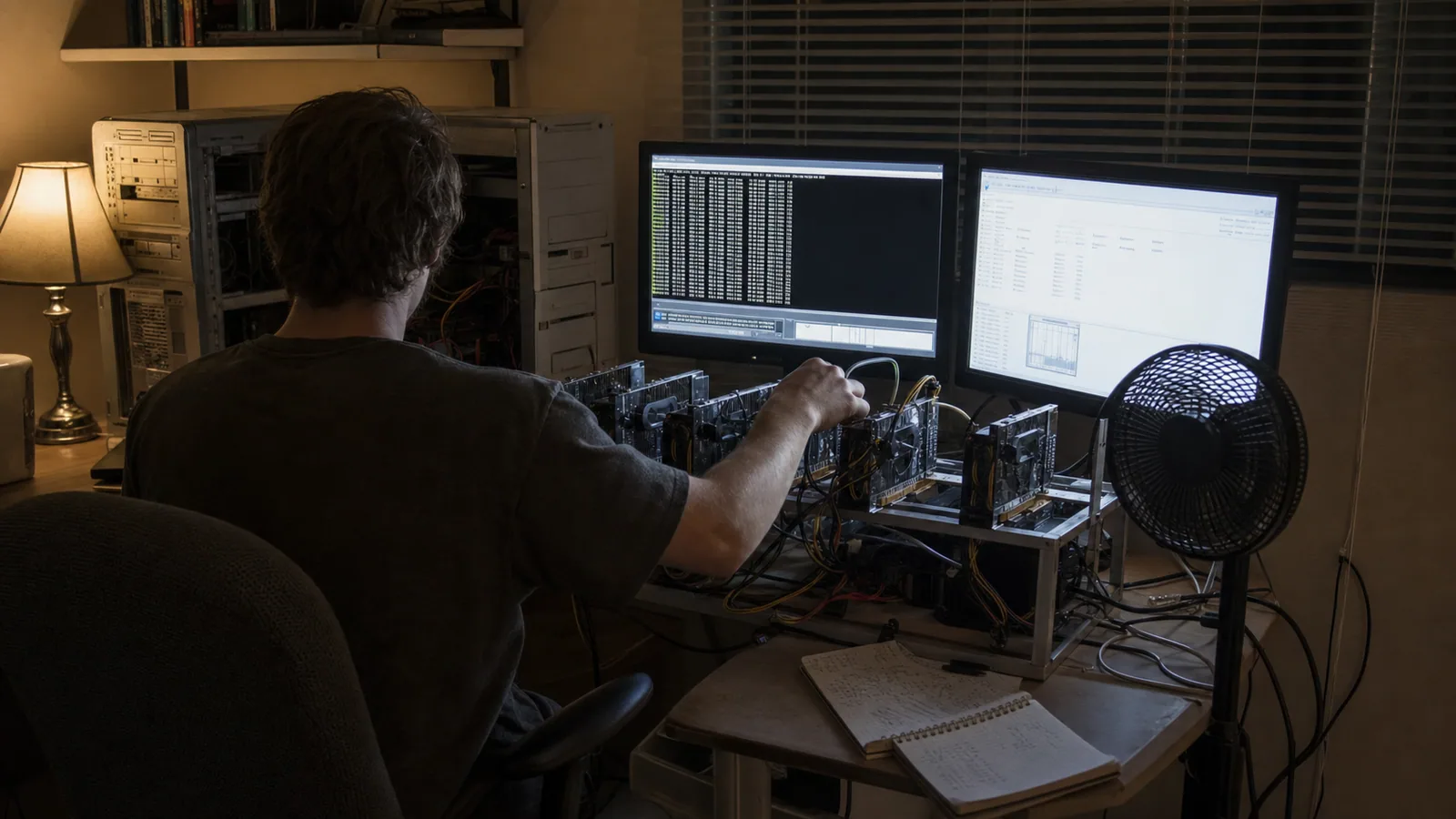
Understand hardware replacement from the workbench
Mining is part of the wallet
In the early days, the number of nodes was small and the hashrate of the entire network was low, so ordinary processors still had a chance to find blocks. The distance between mining, validating transactions and running nodes is also much closer than today.
Parallel computing changes competition
GPU can handle a large number of similar tasks at the same time, greatly improving the SHA-256 hashrate of a single computer, and also making miners start to care about drivers, temperature, power supply and multi-card stability.
Efficiency is more important than pure hashrate
FPGAs can configure circuits for specific operations and typically consume less power than GPUs. Although the deployment threshold is higher, it brings the industry towards energy efficiency and specialization.
Back to the hardware discussion scene from 2011–2013
The timeline of specifications, pre-orders, batches and deliveries of Icarus, Avalon and the first batch of ASICs can be found in the original discussion thread.
key node
Time points help you locate changes and do not reduce complex history to a single cause.
- CPU mining
The Bitcoin software has a built-in mining function, and the block subsidy is 50 BTC per block.
- GPU miners emerge
Parallel computing has rapidly increased the hashrate of a single machine, and the relative competitiveness of CPUs has declined.
- FPGA transition
Miners began to use programmable circuits with lower power consumption to pursue every watt of hashrate.
How manufacturers and industries move
Hardware, mines, energy and policies affect each other. Only trends that can directly affect miners' judgment are listed here.
Push mining from stand-alone experiments to collaborative and professional tools.
For the first time, miners regard machine room conditions as core capabilities.
After reading, take away at least these three things
- The unit of hashrate will change, but the income will always depend on your proportion of the hashrate of the entire network.
- Power consumption, heat dissipation and stability have not been additional issues since the GPU era.
- Just because home computers were available in the early days does not mean that you can still make stable profits in the same way today.