

What Is BTCB2? A Guide to SC Miners, Pools and Profitability Estimates
BTCB2 does not make an SC miner mine the current BTC mainnet. It is a name used by some pools and community members for a new fork chain using BLAKE2b. Participation depends on the chain's work format, gateway, pool, and exact device.
The network is very new, and its naming, tools, pools, and market support may change quickly. This guide explains the verifiable operating path without treating project or pool claims as manufacturer endorsement, fixed earnings, or a payback promise.
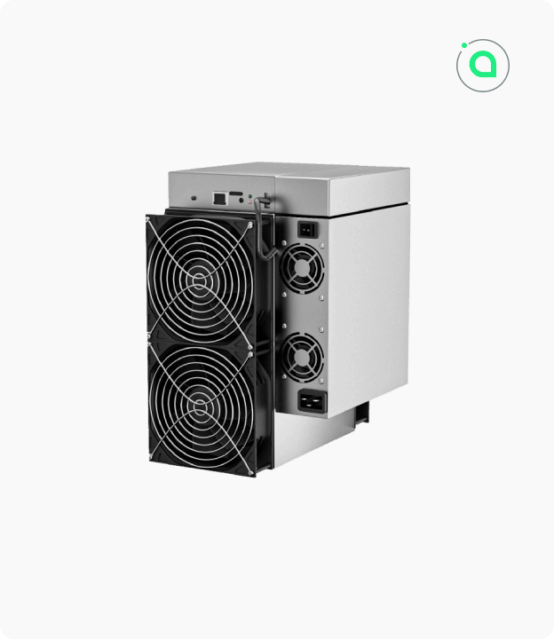
Four points first
- Learn treats BTCB2 as a separate coin ID; it does not share BTC price, difficulty, subsidy, or revenue fallbacks.
- Project documentation lists some BLAKE2b and BLAKE2b-Sia devices, but model-level compatibility still depends on the evidence and accepted shares.
- SC and BTCB2 are separate networks, and the same hashrate cannot be counted in full on both at once.
- When no reliable BTCB2 quote exists, use coin output and electricity cost only; BTC price is not a substitute.
For a first test, use a new dedicated wallet and a small amount of hashrate. Never import a seed holding BTC, and do not assume an ordinary BTC deposit address recognizes BTCB2.
Learn uses BTCB2 to keep it separate from the BTC mainnet
The bitcoin-blake2b.org project calls itself Bitcoin, while pools such as AlphaPool and NonKYC's BTCB2/USDT market use BTCB2 to identify the fork-chain asset; other pools call it a community hard fork. These claims are not consistent, so Learn uses the neutral data label Bitcoin BLAKE2b (BTCB2) without deciding which chain owns the name.
Why some SC miners may participate, but not all can be assumed compatible
A compatible gateway translates this chain's new header-v2 work into Sia-style work for ASICs. Project miner documentation explicitly lists devices including the Antminer A3, Goldshell SC5 Pro, and SC Lite, but the gateway is still labeled public beta. Other models must be classified individually as sourced, pending, or incompatible in the centralized compatibility data.
Confirm BLAKE2b-Sia computation
A model's ability to mine SC is only the first layer. Multi-algorithm devices must use SC mode, not HNS or another mode's specifications.
Match the work format and gateway
Sharing the BLAKE2b name does not guarantee compatible Stratum, headers, or firmware; work must come from a node or pool supporting this chain.
Accepted shares are the final check
A connection does not prove valid work. Start with limited hashrate and verify job updates, accepted shares, rejection rate, and pool records.
Do these five checks before copying a pool endpoint
Checked September 28, 2026: AlphaPool explicitly says its old custodial SV1 pool is closed; the exact shutdown time is unspecified. Old connection details are historical: do not direct new miners or rental orders to that pool. The operator says existing rewards will be paid when mature and spendable; Learn has not tested those payments. The new entry is xbt.alphapool.tech, using DATUM and direct coinbase allocation, still subject to maturity rules.
- 01
Create a new wallet and seed used only for BTCB2, and record its recovery procedure.
- 02
Choose PPLNS or solo, and confirm the page describes mainnet rather than testnet.
- 03
Use the pool's current official page to verify supported hardware, connection details, fees, maturity, and payout conditions.
- 04
Start with limited hashrate and confirm jobs keep updating and shares are accepted; a connected indicator alone is insufficient.
- 05
Check worker, block, maturity, and actual payout separately in the pool records and block explorer.
PPLNS versus solo is not a choice between guaranteed returns
Both calculate on the same BTCB2 network. The main differences are how block luck is distributed, who records shares, fees, and payout flow. Expected output is not a fixed daily payment.
Shares allocate rewards after the pool finds a block
Potentially smoother, but still dependent on pool blocks and the PPLNS window
- Current fee and PPLNS window
- Reward maturity and minimum payout
- Rejection rate, disconnects, and worker accounting
Payment occurs only when the miner finds a valid block
Low hashrate may go a long time without payment; mathematical expectation is not a schedule
- Self-hosted solo versus a solo pool submitting on your behalf
- Fees and coinbase allocation after a found block
- Node, gateway, timing, and block-acceptance records
TIDES: separate reward allocation from custody
Rewards can be shared according to pooled work while the block's coinbase transaction pays miners directly. Direct receipt does not mean solo mining or guarantee a block or payment every day.
Rechecked October 6, 2026: the new DATUM page lists a 2.50% operations fee, and the TIDES API reports fee_bps=250 and window_blocks=8, matching the first observation on October 5. The announcement and effective times of the fee change remain unverified. The 2.95% observed on September 28 is historical. The old PPLNS API still lists 2.95%, but that pool has announced closure; a readable API does not mean it accepts new miners or orders. September 21 PPLNS 5% / TIDES 1% values are also historical snapshots. TIDES allocates coinbase by work within the window. D is network difficulty: 8×D measures work, not guaranteed payment after eight blocks. The old custodial pool’s 0.01 BTCB2 batch threshold and Available Balance do not apply to direct DATUM allocation.
The new page advertises a 0.5% finder bonus payable once that block’s coins become spendable. This is an operator claim without verified complete payment records, not guaranteed income, and should not simply be added to the operations fee as a uniform rate for all miners. The old Monday Stratum subsidy is no longer presented as a term for new orders; an API finder_fee_share_bps of 0 does not establish whether other subsidies are actually paid.
Rechecked October 30, 2026: AlphaPool’s official setup page now specifies this BLAKE2b chain’s Bitcoin Knots 29.4.3, and its homepage says to upgrade before height 979919. Check your node and self-hosted DATUM gateway versions, backups and checksums, then follow the official upgrade instructions. Retain full-allocation, blockmaxweight=740000, pooled_mining_only=true and accepted-share checks. A node update does not establish that Learn has verified other gateway builds, hardware compatibility or actual payments.
- Version and patch: the previously checked conservative route is iohzrd/datum_gateway commit 7491a5099dd5d887a027c812f71de63e0d5986a3 plus pooled-only-integrity-7491a509.patch. The README behavior below applies to this combination, which is no longer the only permitted build. A recommended-build policy does not mean Learn has verified other builds or current master as safe, and is not an instruction to remove an existing patch.
- File verification: before following the official README, compare the full SHA-256 hashes with the official SHA256SUMS; matching filenames are insufficient. Stop if a hash differs. Learn checked that the patch and README match the published hashes, but same-site checksums are not an independent security audit or a hardware test.
- Two settings: the current setup page still specifies blockmaxweight=740000 in the node’s bitcoin.conf to reserve room for the full coinbase payout split, and its gateway datum example still sets pooled_mining_only=true. Do not interpret the build-selection paragraph as saying 740000 is the pool’s only operational condition. The README for the patch above says it does not detect split truncation caused by insufficient template space, so applying it does not replace the block-capacity setting.
If the full split is unavailable, the patched pooled-only gateway waits instead of serving work that pays only the pool address. The README says that after more than 60 seconds without a usable split it disconnects miners and temporarily refuses new connections until a split returns. Failover depends on a compatible backup pool configured in advance. Do not disable pooled-only simply to appear online; this waiting or mining pause does not establish that the entire chain has stopped producing blocks.
After connecting, check gateway logs, pool-recorded accepted shares and payout outputs in actual block coinbases together; a successful connection alone is insufficient. The README above describes older code serving pool-address-only work without miners’ allocation; its patched pooled-only gateway accepts only work classes with a published full split. This behavior is specific to that version and patch. It does not establish that every other build violates current pool rules or that all DATUM implementations behave this way. Learn has not tested connections, compatibility of other builds or payments. Paid managed nodes are a separate service.
How to read the Learn calculator
After switching to BTCB2, the calculator reads only this chain's height, active difficulty, subsidy, and data status, then applies the selected model's SC-mode hashrate and power. It does not read the BTC-mainnet snapshot or add SC and BTCB2 together.
- 01
Check timestamp and validation status first; stale or conflicting data must not be labeled current earnings.
- 02
Confirm hashrate and power come from the model's SC mode, especially on multi-algorithm devices such as Goldshell HS miners.
- 03
Enter your electricity rate, extra power, uptime, and pool fee; without a selected pool, the fee is only an estimate assumption.
- 04
Compare coin output and daily electricity cost; use the USD reference value only when a reliable quote exists.
Several stages separate an accepted share from a sellable asset
Accepted shares, block rewards, pool credit, spendability and exchange withdrawals are separate stages. On September 24, AlphaPool’s PPLNS FAQ distinguishes credit after 100 confirmations from payment after long maturity. Older 100-block text is not a current spendability guarantee. Direct TIDES coinbase receipts remain subject to chain and node rules; exchange deposits and withdrawals require separate checks.
Direct coinbase receipt is not immediate spendability. Release 29.4.3 retains the historical validation window and requires 25,920 blocks independently for rewards generated from height 979919 whose mining block’s parent MTP is still before RDTS expiry. About 180 days is only a target-interval conversion. For earlier rewards, ordinary 100-block consensus maturity after the historical window differs from the node’s continuing 6,480-block transaction policy; expiry does not guarantee immediate relay or payment. The September 24 observation at height 973861 and allocation example at block 970807 remain historical, not today’s payout terms.
- 01
Accepted share
The pool accepts the proof of work; no block has necessarily been found.
- 02
Block found
Solo tracks the miner's valid block; PPLNS tracks whether the pool finds one.
- 03
Reward maturity
The coinbase must satisfy chain rules or pool conditions before payout.
- 04
Pool credit / payout
Check pending and available balances, thresholds, and the on-chain transaction.
- 05
Wallet receipt
Verify with a compatible wallet and this chain's explorer, not a BTC-mainnet balance.
- 06
Trade and withdrawal
Deposit, trade, and withdrawal exist only when a platform explicitly supports this chain.
Which wallet should I use for BTCB2 mining?
The released version checked October 30, 2026 is this BLAKE2b chain’s 29.4.3.knots20260508, published October 28. Version 29.4.1 from September 8 and 29.4.2 from September 21 are historical. The release asks nodes and miners to upgrade before height 979919; late upgrades recheck affected blocks, and pruned nodes may need to resync. Back up first, then verify the operating-system files, checksums and upgrade notes on the official release page. Keep a dedicated BTCB2 wallet and data directory, without BTC wallets, keys or seed phrases. A published release does not prove network-wide or service-wide adoption.
Next, let the application synchronize the BLAKE2b blockchain. Once synced, obtain a receiving address from the wallet and enter it in your pool's payout-address field. You can then check pool payments in this dedicated wallet.
Do not use an ordinary BTC deposit address or import your existing BTC private keys or seed phrase.
Renting Blake2b hashrate is not direct BTCB2 mining
In a rental, the renter decides which compatible work endpoint receives the hashrate and the owner receives marketplace order settlement. In direct BTCB2 mining, hashrate enters this chain's pool or solo work and revenue comes from its blocks. The data sources, costs, and risks differ, so the same revenue number cannot represent both.
Questions most often confused before starting
Is BTCB2 the same as BTC?
Not as the term BTC-mainnet asset is used in this guide. This is a fork chain that switched to BLAKE2b after shared history. The project makes its own naming claim, while some pools use BTCB2 to distinguish it. Learn keeps coin IDs, price, difficulty, and revenue data separate.
Can an Antminer S19 or S21 mine BTCB2?
No. These machines calculate SHA-256d, while this BTCB2 chain requires BLAKE2b and header-v2 work after the fork height. A pool-address change cannot convert the algorithm.
Can every miner that mines SC connect to a BTCB2 pool?
It cannot be guaranteed. Verify the model and mode, work format, firmware, pool support, and accepted shares. Learn separates sourced compatibility, pending checks, and known limitations.
Will a PPLNS expected output arrive every day?
No. Expected output is a long-run average based on difficulty, hashrate, and operating conditions. Actual credit also depends on when the pool finds blocks, the PPLNS window, maturity, and payout rules.
Can daily SC and BTCB2 output be added together?
The same hashrate cannot be counted twice in full. Each period belongs to the chain the miner actually targets, and each chain has separate difficulty, subsidy, price, and data status.
Can I use an ordinary BTC exchange deposit address?
Do not assume so. A similar-looking address does not mean the platform supports this fork chain. Consider a small test only when the exchange explicitly lists the BTCB2 or Bitcoin BLAKE2b network; use a new dedicated wallet first.
Sources and verification limits
Protocol and fork background come from the BIP, project, and software-version documentation. Pool mode, connection, and payout details represent each pool's own claims. The block explorer provides a separate view of chain activity.
- Bitcoin Knots | 29.4.3 release and upgrade notes
- Released tag | Mainnet maturity parameters
- Released tag | Consensus and mempool validation
- AlphaPool TIDES | Allocation, maturity and current access terms
- AlphaPool | 7491a509 full-split patch README
- AlphaPool | Patch-file SHA-256 checksums
- AlphaPool TIDES API | Fee and work window
- AlphaPool PPLNS API | Current fee
- mempool.guide | Block 970807 coinbase example
- BIP-110 | Original Reduced Data Temporary Softfork specification
- Bitcoin BLAKE2b project | Developer and fork documentation
- Bitcoin BLAKE2b project | Miners and DATUM
- Bitcoin BLAKE2b project | Mainnet solo setup and health checks
- Bitcoin Knots | 29.4.1 release and BLAKE2b changes
- AlphaPool | BLAKE2b PPLNS pool and wallet guidance
- XorPool | Bitcoin BLAKE2b solo pool
- XorPool | Public pool-status API
- mempool.guide | Bitcoin BLAKE2b block explorer
- NonKYC | BTCB2/USDT market
- NonKYC | Public REST API documentation
Checked through September 6, 2026. The project documentation, BIP-110 status, two public pool entry points, explorer, and NonKYC BTCB2/USDT market were verified. That market exposes bids, asks, and recent trades, but a quoted price does not mean all output can execute at that price. Market depth sufficient for larger amounts, mainstream exchange support, compatibility of every SC miner, and JGM hardware operation remain unverified.