

Why the Sudden SC Miner “Windfall”? BTCB2 Mining and Hashrate Rental
Why is the same SC5 Pro suddenly associated with “one-day payback”? Before budgeting a purchase around the highest number, look at what changed: where its hashrate works and who is willing to pay for it.
Start with the BTCB2 event, then follow one machine through one rental period to separate mining, rent, and money actually retained.
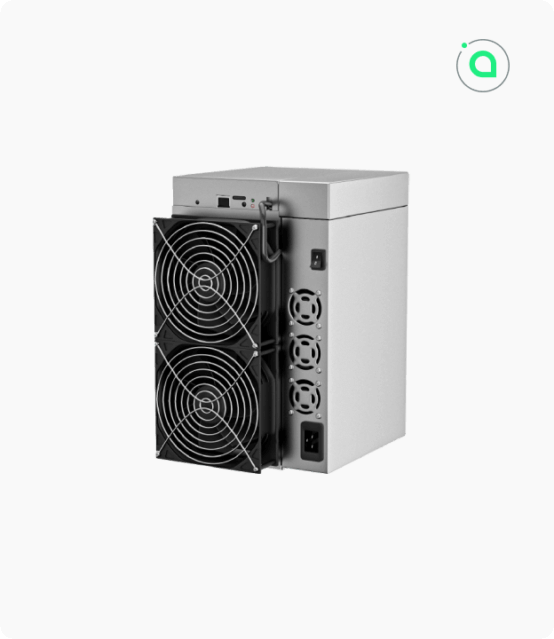
The same SC5 Pro: why the “one-day payback” claim?
An SC5 Pro built for SC suddenly appears in discussions of unusually high earnings—even “one-day payback.” The machine has not become faster overnight. BTCB2 has given compatible hashrate another destination, creating a possible gap between the value of mining a new chain and the cost of renting that hashrate.
A period of high estimated output value and high rental quotes can look compelling. To establish payback, however, we need the date, operating duration, machine count, and whether the figure is a listing, an estimate, received rent, or net proceeds from completed sales. A spoken claim without that context is not a transaction record.
We do not have complete records sufficient to verify “one-day payback,” so we do not present it as realized earnings. The teaching example below separates the owner’s and renter’s accounts for one SC5 Pro. The video is discussion context, not evidence of a completed profitable trade.
Why does BTCB2 involve SC mining hardware?
BTCB2 is a fork chain using BLAKE2b proof of work, not the current BTC mainnet. Project documentation places the transition at height 961,640. Some ASICs built for Sia-style work therefore have a potential new use. The fork changed its workload; the SC5 Pro did not become a SHA-256 miner, and BIP-110 itself did not switch BTC to BLAKE2b.
Goldshell lists the SC5 Pro as Blake2b/SC hardware. BTCB2’s miner documentation separately names the SC5 Pro and SC Lite. That is project-documented compatibility, not a manufacturer or Learn hardware test, and does not establish support for every SC model. The coin page covers the BIP-110 background and fork timeline.
An exchange may label this chain BTCB2, XBT or BIP110; verify the venue and deposit network. The naming guide explains these differences. Read the names and exchanges guide →
One machine: mine yourself or rent it to someone else
When mining directly, the owner connects a compatible SC5 Pro to a BTCB2 pool, receives BTCB2, and handles payouts and sales. When renting out the machine, the owner supplies hashrate and earns rent. In this BTCB2 scenario, the renter selects a BTCB2 pool, receives the mined coins, and bears the mining outcome.
Hashrate: SC5 Pro → rental routing → the renter’s BTCB2 pool. Payment: renter → platform → owner’s rent; pool → the renter’s BTCB2 address. Rent may be paid in BTC, but the payment asset and mined asset belong to different stages, and BTC is not the only possible payment asset.
A renter may expect the net sale value of BTCB2 mined during the rental to exceed the total rental bill, or may simply be testing a strategy. Without order and renter evidence, we cannot attribute every rental to BTCB2 or call this locked-in, risk-free arbitrage.
Where can high earnings shrink?
Continue the same 12-hour SC5 Pro example: the renter expected $130 in net sale proceeds, but weaker bids leave only $70. Against the $103 rental bill, that is a $33 loss. If the owner completes the original order successfully, rent is settled under that order, but the next renter may offer less or not rent at all.
Output must be recalculated using effective difficulty. With effective difficulty, effective hashrate, and rewards fixed, a rise in network hashrate does not by itself divide current theoretical output per TH by the same factor. Added hashrate can affect later difficulty adjustments. We neither apply BTC mainnet’s roughly two-week interval to BTCB2 nor predict the next adjustment.
Time matters too. A quote equivalent to $200 per 24 hours produces $100 in rent for a completed 12-hour rental at that rate—not $200 received. Idle time may still consume power. If the owner mines during the remaining time, it must be accounted for separately; the same hashrate and time cannot earn both revenues.
Finally, valuing mined coins is not a guarantee of sale. Check executable bid depth, slippage, trading and withdrawal costs, and whether the pool has paid. Higher rent or difficulty, lower effective hashrate, or a falling price can erase the expected spread.
Owning a machine and buying one now are different decisions
If you already own an SC5 Pro, start with a small working trial rather than the highest quote. Check the model, firmware, and pool work format; inspect accepted shares and pool-side effective hashrate; then verify crediting, payout, and a small sale. Compare actual net results for equivalent periods to see whether the screen’s estimate is attainable.
Checked September 28, 2026: AlphaPool explicitly says its old custodial SV1 pool is closed; the exact shutdown time is unspecified. Old connection details are historical: do not direct new miners or rental orders to that pool. The operator says existing rewards will be paid when mature and spendable; Learn has not tested those payments. The new entry is xbt.alphapool.tech, using DATUM and direct coinbase allocation, still subject to maturity rules.
Rechecked October 8, 2026: AlphaPool now recommends its DATUM gateway build instead of requiring it, still specifies blockmaxweight=740000 and retains pooled_mining_only=true in its example configuration. The previously checked 7491a509 plus full-split patch remains a conservative route with SHA-256 verification; the README’s waiting and fail-close behavior after more than 60 seconds applies to that combination. Still check accepted shares and coinbase allocation rather than online status alone. The relaxed build policy is not a reason to remove a patch or treat every build as safe. See the guide below; Learn has not tested connections or payments.
The AlphaPool address-blacklisting PR #396 remained open and unmerged when rechecked September 21, 2026 at 15:34 Taipei. It is separate from the merged and released long-maturity PR #419, which can affect when mined funds become usable. The September 9 connection-cap notice is historical; current access must follow the September 28 closure and DATUM notice. Connections have not been tested.
Buying now adds equipment cost and waiting time. Consider purchase price, shipping, and delivery-to-operation time, plus the machine’s use and resale prospects after interest fades. An early buyer’s low cost cannot be combined with today’s earnings to calculate a new buyer’s payback, and today’s earnings may not survive until delivery.
Use a dedicated BTCB2 wallet and verify the chain, pool endpoint, and payout threshold. Never give the seed phrase of your main holdings wallet to an unfamiliar tool. Follow the instructions of an existing pool offering compatible connections. Node synchronization and gateway setup are additional requirements for a self-hosted node/DATUM route, not requirements for every pool user.
Return to the machine and recalculate with current conditions
The remaining opportunity depends on current effective difficulty, output, and executable prices. Open BTCB2 mode below and use your own electricity and operating conditions. It estimates direct mining, not a renter’s ledger, and assumes no rental orders, full-day occupancy, or guaranteed sales.
Without a reliable price, examine coin output and power cost rather than filling the missing quote with a profit assumption. Existing owners should verify executable results; prospective buyers must also assess purchase price and arrival time. That is more useful than anchoring a decision to one day’s peak.
Why not buy BTCB2 directly?
The renter may expect a lower acquisition cost through rented hashrate. That depends on the complete rental bill, actual output, and executable bids—not an ask price treated as guaranteed sale proceeds.
Sources and verification date
Specifications, compatibility and platform fees: September 7, 2026. AlphaPool connection notice: September 9 at 11:48 Taipei. PR #396, the long-maturity release and DxPool notice: September 21 at 15:34 Taipei. Original teaching examples and fees retain their historical assumptions, not current transactions.
- Goldshell | SC5 PRO specifications ↗
- Goldshell | SC LITE specifications ↗
- Bitcoin Core | Block-header hash implementation ↗
- Bitcoin Core|double-SHA256 HashWriter ↗
- Bitcoin BIPs | Original BIP-110 ↗
- Bitcoin Blake2b project | Developer documentation ↗
- Bitcoin Blake2b project | Miners and DATUM ↗
- AlphaPool | BTCB2 pool label ↗
- AlphaPool | DATUM setup and access terms ↗
- AlphaPool operator | Connection-cap announcement ↗
- Bitcoin Knots | PR #396 (unmerged at check time) ↗
- Mining Rig Rentals | Algorithm list ↗
- Mining Rig Rentals | How renters select a pool ↗
- Mining Rig Rentals | Supported rental payment assets ↗
- Mining Rig Rentals | Renter fee documentation ↗
- Mining Rig Rentals | Rig-owner settlement and withdrawal ↗
- Mining Rig Rentals | Rig-owner fee documentation ↗
- Mining Rig Rentals | Blake2B marketplace ↗