

What Is Home or Lottery Mining? Understand the Odds and the Space First
A small miner can participate in Bitcoin mining without providing a dependable household income. Start with two questions: how are rewards allocated, and can you accommodate ongoing electricity use, sound, heat and maintenance?
Home describes hardware and its setting. Lottery is an informal description of the outcomes of low-hashrate solo mining. Keeping them separate avoids confusing a learning device, pooled payments and exceptional block-finding stories.
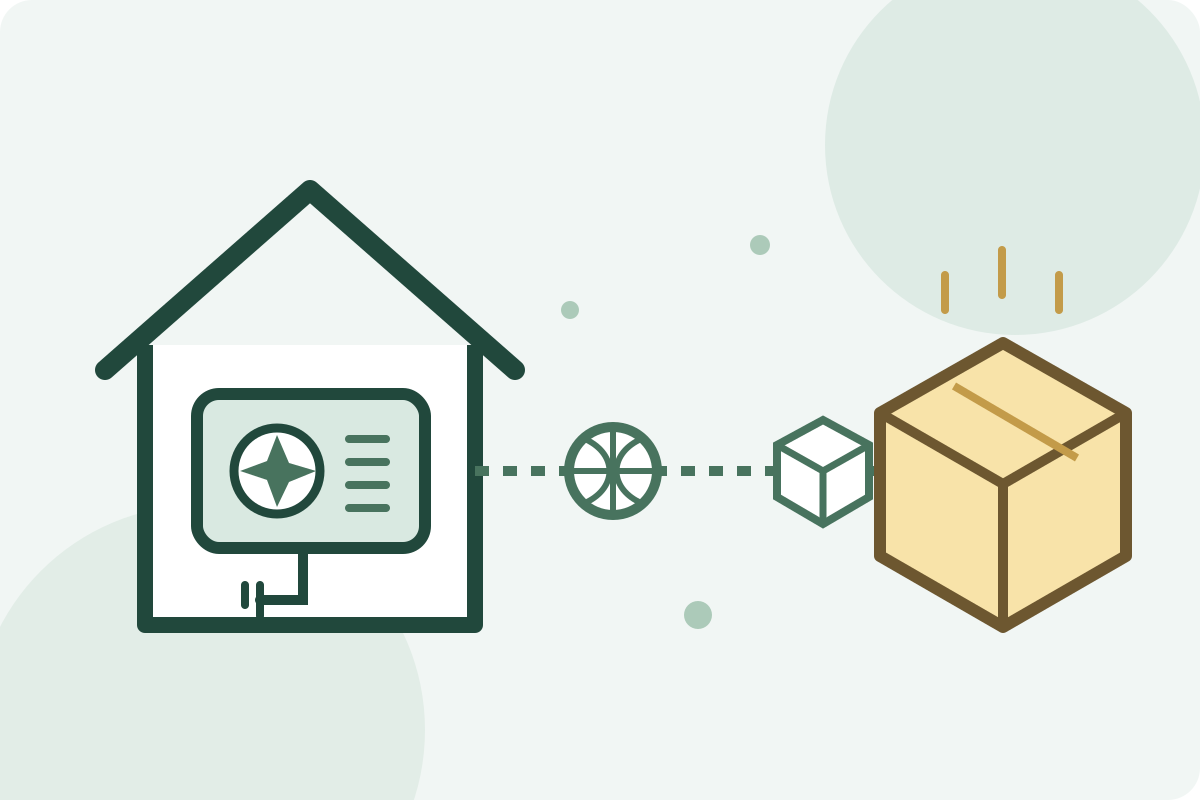
Home is a setting; solo is a reward arrangement
Home miners typically use equipment whose size or power demand they can accommodate while learning setup, monitoring and maintenance. Depending on firmware and service compatibility, the same device may connect to a shared mining pool or a solo service. Plugging it in does not automatically select lottery mining.
A shared pool distributes payments under its payout rules for submitted work. Under solo mining, a reward arises when your valid block is accepted by the network. A solo service may charge a fee and still handles work distribution and block propagation; using one does not remove every intermediary.
Every attempt must meet the target; there is no waiting-list guarantee
A miner repeatedly hashes candidate block headers. Only a result meeting the current network target can become a valid block. With difficulty held constant and valid work submitted normally, more hashrate means more attempts in the same time, not preferential treatment for an individual hash.
Treating suitable hash attempts as independent is a probability model. Earlier failures do not earn priority on the next attempt. Longer uptime adds attempts, not a guaranteed block date. Difficulty, effective hashrate, disconnections and stale work can change the real conditions.
An expected waiting time describes many comparable scenarios; it is not your countdown. With low-hashrate solo mining, receiving no block reward throughout the device's useful life must be an acceptable outcome. Exceptional success stories do not establish ordinary cash flow or a payback promise.
Measure power at the wall and account for the heat
Energy use follows watts divided by 1,000, multiplied by operating hours, giving kWh. A hypothetical measured wall average of 100 W over 24 hours consumes 2.4 kWh. This is a teaching example, not a device test, electricity tariff or mining-income estimate.
A power adapter's rating is not the continuous wall demand in every mode. Check the actual mode, runtime and power-supply losses, and include any additional fan or air conditioning. Failure to find a block does not reverse the electricity already consumed.
The device adds an ongoing heat load indoors. Whether that heat is useful in winter or manageable in summer depends on the room and climate; it is not universally free heating. Keep airflow clear rather than enclosing or covering the unit to suppress noise. Check power and outlet capacity against device requirements and qualified local advice.
A home label does not replace noise, ventilation or connector checks
For a specification-reading example, Canaan lists the Nano 3S at 6 TH/s with maximum power of 140 W, and describes laboratory noise conditions. These are manufacturer figures, not Learn measurements. Mode, temperature, background sound and placement matter; a decibel figure does not guarantee bedside suitability.
Canaan's Nano 3S USB-C connector notice describes some overheating or melting reports and an upgrade and support programme for affected users. It advises the bundled adapter and cable, a fully seated plug, avoiding condensation and cable strain, and immediate shutdown and support contact for abnormal heat or smell. Checked on 2026-10-27; no publication date is shown, so this is not presented as a same-day incident or a recall of every unit.
- Agree on continuous fan sound and heat with other occupants before choosing a location.
- Use the exact model's environmental, power and cable requirements instead of another home miner's specifications.
- Periodically check connectors, cables, dust and device status. Stop on abnormalities rather than attempting repairs while powered.
Use a stable connection, the correct service and your own payout address
Mining needs fresh work and a connection for submitting results. Disconnections and stale work reduce effective attempts. A faster internet subscription does not automatically increase ASIC hashrate. Check service availability, stability, supported connectivity and the service's recommended regional endpoint.
Verify endpoint, port, payout mode and coin using the device and pool documentation. Do not confuse a shared pool with solo or another chain's service with BTC. Wi-Fi and adapter compatibility can be conditional even when the physical connector appears to fit.
A payout address is different from a wallet recovery phrase. Use an address suitable for the chain and service, checking it carefully. Never enter a recovery phrase or private key into a pool, miner dashboard or unfamiliar support form. Keep administration on a controlled network with trusted firmware and a distinct password rather than exposing it casually to the internet.
A learning or hobby setup, not a way to fund fixed bills
A small home miner can be a learning tool if the aim is to understand proof of work, configuration and monitoring, and the equipment and electricity remain affordable without a block reward. Choosing solo is a separate decision requiring an understanding of its reward arrangement.
If you need dependable monthly income or a fixed payback date, cannot accommodate ongoing sound and heat, or lack suitable power and connectivity, exceptional block finds are not a reason to buy. Reading, simulation and comparison are valid stopping points; participation does not require an immediate hardware purchase.
Five common misconceptions and a practical next step
Choose what you want to learn, verify the hardware and service, and consider a purchase last. Accepting a prolonged absence of block rewards, having a suitable setting and being able to maintain the device are starting conditions for further comparison. A product page helps check current specifications, availability and service terms; it does not replace the probability and safety assessment.
- Home miner means lottery miner: hardware setting and reward arrangement are different; check the configured service.
- Another small miner found a block, so mine is due: an example establishes possibility, not your timing or earnings.
- Each failure makes the next attempt easier: more runtime adds attempts, not priority for the next hash.
- More shares guarantee solo income: share feedback and a valid network block have different thresholds.
- Low power removes safety and household concerns: cables, connectors, airflow, sound and ongoing energy use still need attention.
Check your own operating conditions
Sources and review scope
Checked on 2026-10-27. Technical documentation supports the underlying mechanisms. Manufacturer material provides specifications and safety guidance, not our own measurements or evidence of returns.
- Bitcoin Developer Guide: Mining
Primary technical explanation of solo mining, pools and shares. Used for stable mechanisms rather than historical operational instructions. Checked: 2026-10-27.
- Bitcoin Technical Reference: Block Headers and Target
Used for the relationship between a valid hash and its target, not dated reward or block-size figures. Checked: 2026-10-27.
- Solo CKPool Documentation and FAQ
Used to distinguish solo services, share difficulty and node connectivity; not a service endorsement or reward guarantee. Checked: 2026-10-27.
- Canaan Nano 3S Manufacturer Specifications
Manufacturer specifications and laboratory conditions, not Learn testing. Official pages differ on the noise range and do not guarantee household experience. Checked: 2026-10-27.
- Canaan Nano 3S USB-C Connector Update
Manufacturer notice about connector issues, support for affected users and precautions. No publication date is provided. Checked: 2026-10-27.
- Canaan Nano 3S Official Shop Technical Specifications
Used to verify maximum power and model specifications; manufacturer prices and promotions are not reproduced. Checked: 2026-10-27.
Check the operating conditions before exploring equipment
If you understand these limitations, use 178 to check current product specifications, availability and after-sales terms. This article does not quote a price; any purchase remains your decision.
View Nano 3S product details at 178