

Is Bitcoin Mining Profitable in 2026?
Before looking at payback days, focus on what really matters: how much BTC the miner may produce, what electricity costs each day, and whether the actual all-in rate is below the current shutdown rate. Operating an owned miner and buying a new one are different decisions.
I will walk through the numbers with an S21 XP and public operating records. Each figure is identified as an actual record, a current offer or an illustration, and any answer that cannot be supported without bills, repairs or resale values is left open.
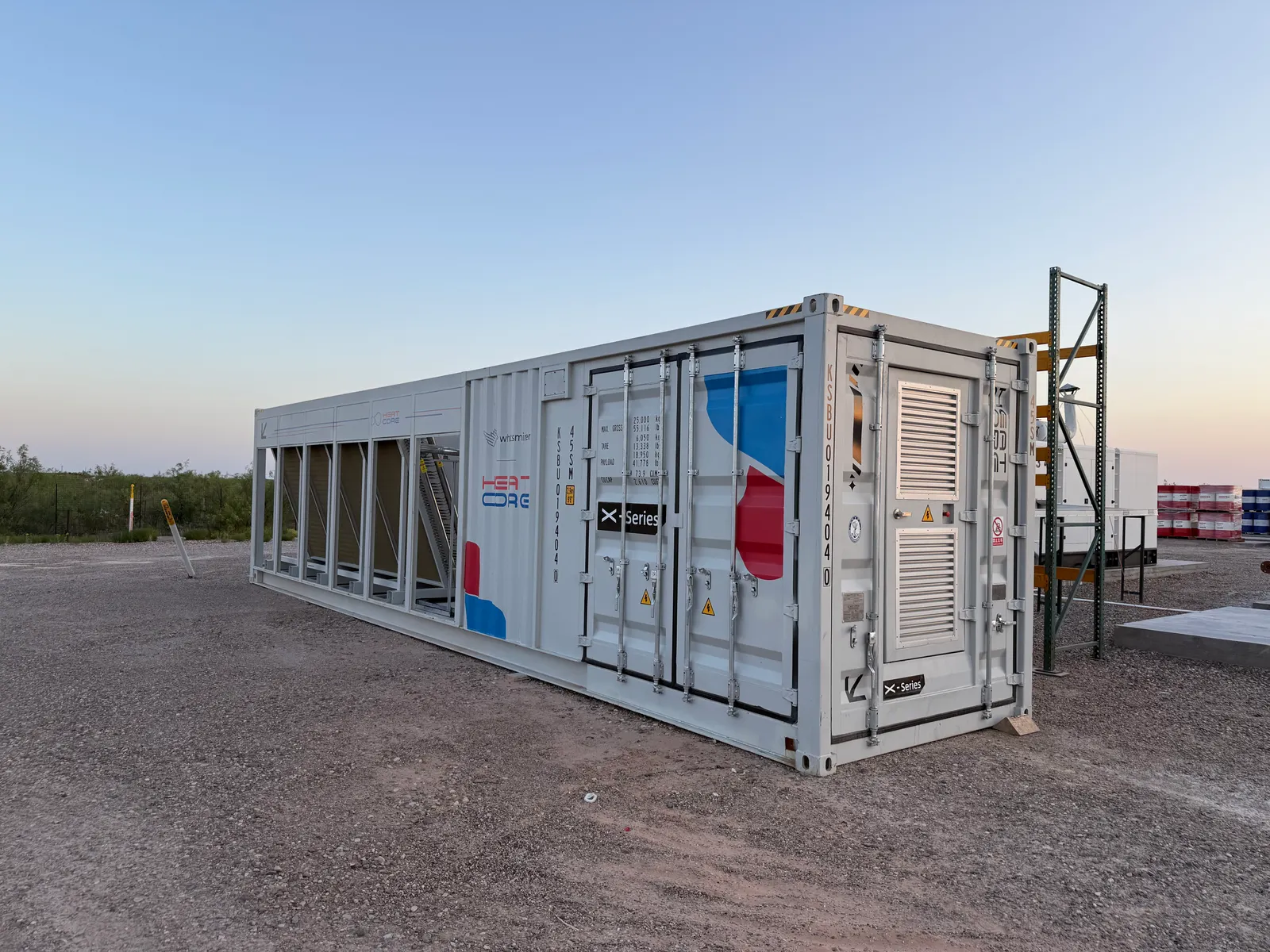
The short answer first
- Start with two numbers: hashrate indicates potential BTC output, while power draw determines how much electricity the miner uses.
- The S21 XP is a high-power machine. At home, circuits, noise and heat matter as much as the rate; with hosting, the final bill and downtime terms matter.
- For the same S21 XP, moving from 0.060 to 0.075 USDT/kWh adds about 1.31 USDT per day, or roughly 39 USDT over 30 days, in theoretical electricity cost.
- If you already own the miner, first check whether the actual all-in electricity rate is below the shutdown electricity rate. If you have not bought it yet, separately assess price, deployment, repairs, downtime and future resale value.
There is no honest rule that says mining is guaranteed to work below one fixed electricity rate. It may still leave money after electricity today, but a different machine price, rate or hosting agreement can change the result completely.
What market is a miner facing today?
BTC price, difficulty and network hashrate change every day, so the figures below update with them. Treat this as today's starting point, not a permanent answer.
- BTC reference priceUSD
- USD 63,159
- Daily BTC baseline per THBTC / TH / 24h
- 0.000000466
- Network dashboardEH/s
- 1016.82
- Network DifficultyT
- 134.8238
- Next difficulty estimate2,016 blocks
- +9.73%
- Latest block heightBitcoin
- 976,588
Every miner faces the same market, but your result still depends on the machine, the all-in electricity rate you actually pay, real operation and purchase price.
Data is expired or incomplete; estimates are temporarily unavailable. ·
Why can newer and older BTC miners tolerate different electricity rates?
Hashrate and power tell you roughly how much a miner produces and how much electricity it uses each day. I put four miners under the same market conditions; the shutdown electricity rate is the highest price per kWh the miner can bear when daily mining value only covers electricity at listed power.
| Miner | Hashrate / power / efficiency | Shutdown electricity rate | After 0.060 electricity | After 0.075 electricity |
|---|---|---|---|---|
| Antminer S23 | 305 TH/s · 3,355 W About 11 J/TH | USD 0.1070/kWh | USD 3.78 | USD 2.57 |
| Antminer S21 XP | 270 TH/s · 3,645 W About 13.5 J/TH | USD 0.0871/kWh | USD 2.37 | USD 1.06 |
| Antminer S21 Pro | 234 TH/s · 3,510 W About 15 J/TH | USD 0.0784/kWh | USD 1.55 | USD 0.29 |
| Antminer S19 K Pro | 120 TH/s · 2,760 W About 23J/TH | USD 0.0512/kWh | USD -0.59 | USD -1.58 |
This table compares models using listed specifications and a 4% effective pool fee. The shutdown electricity rate is not a hosting quote; for a real operating decision, replace the assumptions with your actual hashrate, extra power and other costs.
How does the same S21 XP compare on home and hosting electricity?
Using the same S21 XP and the same daily output, the comparison directly deducts electricity under Brazil and US hosting offers, then under US and Taiwan residential examples. This shows why lower electricity can make hosting relevant before you check circuits, noise, heat, downtime and repair terms.
How much remains after electricity under hosting and home power?
All four scenarios use the same basis: output at 95% of the listed level, a 4% effective pool fee and electricity billed for continuous operation. The shared assumptions appear once, while the table compares billing methods and the balance after electricity.
| Electricity scenario | Rate / billing method | Theoretical electricity/day | After electricity/day | After electricity/30 days |
|---|---|---|---|---|
| Brazil Published hosting offer · EMCD 4,050 USDT · View terms | 0.060 USDT/kWh | USD 5.25 | +USD 1.99 | +USD 59.81 |
| United States Published hosting offer · Wukong Technology 4,050 USDT · View terms | 0.075 USDT/kWh | USD 6.56 | +USD 0.68 | +USD 20.44 |
| US residential electricity | national-average example Residential example · EIA residential-sector average, Jan–Jun 2026 Verify the official EIA data | USD 0.1816/kWh | USD 15.89 | −USD 8.64 | −USD 259.32 |
| Taiwan residential electricity | non-time-of-use example Residential example · Taipower tariff effective since 2025-10-01 Verify the official Taipower tariff | Six progressive tiers, not one flat rate | Summer, June 1–September 30USD 19.32TWD 625/day Non-summerUSD 15.53TWD 502/day | Summer, June 1–September 30−USD 12.08 Non-summer−USD 8.29 | Summer, June 1–September 30−USD 362.47 Non-summer−USD 248.72 |
This is an average across the 50 states and the District of Columbia, not the rate for a specific state, utility, tariff plan or household. Use your own bill for an actual decision.
This example treats the miner as a separate load and uses a 30-day equivalent with monthly tiers. Taipower normally reads residential meters every two months and doubles each tier for billing. Existing household usage shares the same tiers, so the real increase is best measured as the bill after installation minus the original bill. This includes only the miner's listed electricity use, excluding cooling, other household loads and adjustments on the actual bill.
See Taiwan's six progressive tiers
For a two-month meter-reading period, each usage tier is doubled.
Under the same output assumptions, residential electricity consumes more of the daily value, so lower-rate hosting may leave a larger balance. A lower rate alone does not automatically make hosting the better choice; replace these examples with your own home bill or complete hosting contract.
The balance after electricity is not net profit; it deducts only theoretical miner electricity. USDT and USD are treated as 1:1 for arithmetic comparison. Taiwan electricity is converted with the site's currently available rate; when daily data is unavailable, the site's fallback rate is used, while the original TWD amount remains visible. Actual costs still require checking cooling, line loss, fixed fees, downtime billing, repairs, tax and exchange rates.
Disclosure: the offers below come from JGM Hub partners. JGM may receive service or advertising fees from partner offers. Inclusion is not an endorsement by Learn; availability, prices and terms are governed by the offer page.
Offers checked: 2026-08-31 | Public source: JGM Hub public offer list
What is the S21 XP's electricity cost to produce BTC now?
A miner continuously converts electricity into BTC. Rather than start by guessing whether price will rise or fall, first ask how much BTC it produces today, what electricity alone costs and how much room remains between the example rate and the shutdown rate.
The example electricity rate is below the theoretical shutdown rate This only shows whether output covers avoidable theoretical electricity. It does not mean the machine price has been recovered, and it excludes auxiliary power, repairs, management fees and downtime costs.
Already own a miner
Should it keep running today?- Enter the actual all-in rate, effective output and auxiliary power to recalculate your own shutdown rate.
- As long as actual operating cost remains below contemporaneous output value, continued operation has a positive marginal contribution; that is not the same as the whole investment being profitable.
- If the actual all-in rate remains above the shutdown rate, consider shutdown, underclocking, relocation or a lower all-in rate rather than operating at a negative marginal contribution.
Considering a new miner
Is this production tool worth buying?- A positive operating contribution only answers whether it can run. A purchase decision must also include machine price, deployment, repairs, downtime and exit costs.
- A miner is still ageing equipment. New-generation efficiency, network difficulty and market supply and demand can all change its future output and resale value.
- A bull market can raise equipment demand and resale prices, but appreciation is not guaranteed; rising difficulty or new-machine supply can offset the effect of BTC price.
Over three years, reassess at every stage
A three-year window crosses the next Bitcoin subsidy halving, so today's output cannot simply be multiplied by 1,095 days. This is not a price or difficulty forecast; it uses the same S21 XP to show that output value and the shutdown rate must be compared again whenever output, difficulty, BTC price or electricity changes.
Now: decide with current data
Use daily BTC output, the actual all-in rate and the shutdown rate. While the all-in rate remains below the shutdown rate, the miner continues converting electricity into BTC and retains the option to operate.
Next halving: recalculate rather than assume
The page currently uses block-subsidy output as its baseline. If the next subsidy is roughly reduced from 3.125 BTC to 1.5625 BTC while every other input is held constant, unit output and the shutdown rate would roughly halve; transaction fees will make the actual result different.
Within three years: run, adjust or pause
Continue accumulating BTC while the actual all-in rate is below the shutdown rate. As the two converge, review electricity and site terms, then consider underclocking, relocation or a pause where equipment ownership and the hosting contract allow. This ability to respond to conditions is part of the miner's value as a tool.
Two conditional outcomes, not a three-year forecast
The estimate below uses the embedded snapshot, not the live block height shown above: 2026-11-19 · #976,588At 144 blocks per day, the next halving is roughly 510 days away; the actual date changes with block production.
Only then are both pre- and post-halving outputs included. It holds difficulty and other inputs constant and assumes output value still covers electricity at every stage; it does not guarantee the actual amount mined.
Under the current static inputs, the example rate would exceed the shutdown rate after the halving; the example stops counting output at that point rather than assuming it keeps running at an electricity loss.
Theoretical shutdown rate after the halvingUSD 0.0414 / kWhA miner's value is more than today's daily output
Production capacity
While the actual all-in rate is below the shutdown rate, it continuously produces BTC at a measurable operating cost.
Operating flexibility
It can run, underclock, relocate or pause as conditions change; three years of uninterrupted operation is not assumed.
Residual equipment value
Resale value can rise or fall with BTC price, difficulty, efficiency generations, condition and supply and demand. It must be checked separately and cannot be assumed to hold or gain value.
Producing BTC below market price applies only when the theoretical electricity cost per BTC is below the contemporaneous BTC price, and it describes marginal operating cost only. Full cost may be higher after machine price, repairs, downtime, management fees and exit costs are included.
The most practical approach is not to predict BTC price three years ahead, but to answer two questions each day: is the owned miner's actual all-in rate still below its shutdown rate, and for a new buyer, can viable operating time and residual equipment value support the full investment?
Where did ten S21 miners average over 362 days?
A single outage or repair can distort a short monthly result, so I chose a 362-day record to show longer-term performance. These ten S21 miners had 1,937 TH/s of listed hashrate and averaged 1,840.56 TH/s in practice. That is more representative of this fleet over time, but it is not an average for every S21 or site.
Antminer S21 air-cooled × 10 (mixed specifications)
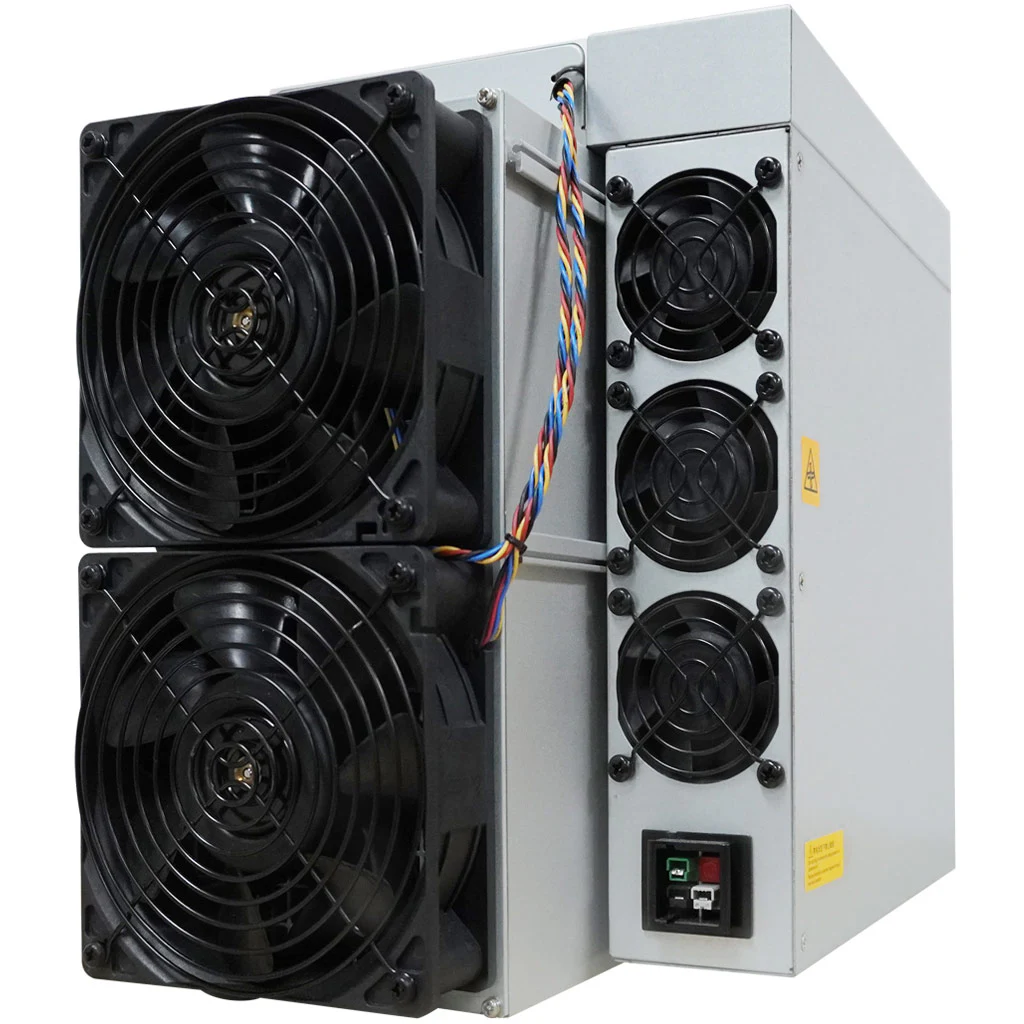
- Period
- 2024-06-14 to 2025-06-10 (362 days)
- Listed total hashrate
- 1,937 TH/s
- Actual average effective hashrate
- 1,840.56 TH/s
- Hashrate attainment
- 95.02% hashrate attainment
- Fleet mix
- Ten S21 air-cooled miners with different exact specifications
- Maintenance / downtime record
- Includes one day of scheduled utility maintenance
- Electricity data
- No matching electricity bill was published
- How 95.02% is calculated
- Actual average effective hashrate divided by listed total hashrate
- What this record can answer
- Shows long-term actual hashrate; without matching electricity and full repair costs, it cannot show how much was earned
This record covers one specific fleet and site and includes one day of scheduled utility maintenance. Without matching electricity bills, wall-power measurements and full repair costs, the 95.02% figure cannot be used to calculate net profit.
A second fleet shows what downtime and repairs can change
If S21 XP still has a daily balance, does a new purchase necessarily pay back?
Published US and Brazil S21 XP offers both listed 4,050 USDT per unit on 2026-08-31. The examples below change electricity, price, difficulty and effective output to show what remains after electricity each day. This is not full net profit because repairs, tax, deposits and future resale value are not included.
The examples first assume listed power for a full day. Downtime does not always mean billing stops completely, so your hosting contract and actual bill remain the final reference.
| Conditions | Daily after electricity | 30-day total | Static payback | Daily balance remains |
|---|---|---|---|---|
| Brazil reference rate 0.060 | USD 1.99positive | USD 59.81positive | ≈ 2,032Days | Yes (still positive) |
| US reference rate 0.075 | USD 0.68positive | USD 20.44positive | ≈ 5,943Days | Yes (still positive) |
| 0.060 | BTC price down 20% | USD 0.55positive | USD 16.36positive | ≈ 7,429Days | Yes (still positive) |
| 0.060 | Difficulty up 10% | USD 1.34positive | USD 40.06positive | ≈ 3,034Days | Yes (still positive) |
| 0.060 | Output falls to 90% | USD 1.61positive | USD 48.38positive | ≈ 2,512Days | Yes (still positive) |
| 0.060 | BTC −20% and difficulty +10% | USD 0.02positive | USD 0.55positive | ≈ 219,335Days | Yes (still positive) |
Payback days assume today's conditions never change. They are useful for comparison, not a promise about the future. If nothing remains after electricity, the table will not force an unrealistic negative payback figure.
The 30-day total adjusts for each scenario's effective output and a 4% effective pool fee, then subtracts theoretical electricity. It is still not full net profit because repairs, fixed fees, tax, extra power and miner depreciation remain excluded.
Data type: dated S21 XP public offers + modelled scenarios | Offers checked: 2026-08-31 | Source: JGM Hub public S21 XP offers
Which matters most: electricity, effective output, difficulty or machine price?
If you can verify only a few things first, which should come first? The table uses the same S21 XP and changes electricity, actual output, difficulty and machine price one at a time so you can see the daily difference directly.
| Condition changed | Daily difference | 30-day difference | Static payback |
|---|---|---|---|
| Baseline: 0.060, 98% output | USD 0.00unchanged | USD 0.00unchanged | ≈ 1,823 |
| Electricity rate 0.060 to 0.075 | −USD 1.31decrease | −USD 39.37decrease | ≈ 4,450 |
| Output 98% to 95% | −USD 0.23decrease | −USD 6.86decrease | ≈ 2,032 |
| Output 95% to 90% | −USD 0.38decrease | −USD 11.44decrease | ≈ 2,512 |
| Difficulty +10% | −USD 0.68decrease | −USD 20.38decrease | ≈ 2,625 |
| BTC price −20% | −USD 1.49decrease | −USD 44.83decrease | ≈ 5,562 |
| Miner offer price +20% | USD 0.00unchanged | USD 0.00unchanged | ≈ 2,187 |
Electricity, BTC price and difficulty directly change what remains each day. Machine price does not change daily output but lengthens payback. Whether downtime reduces the bill depends on the hosting contract.
Why are there different answers for the cost to mine 1 BTC?
Some figures include electricity only, while others also include repairs and machine cost, so the reported cost to mine 1 BTC can differ widely. First check what is included; a large mining company's corporate cost cannot be applied directly to one retail-hosted miner.
Electricity cost/BTC
Theoretical daily electricity ÷ adjusted daily BTC output
USD 45,773Operating cost/BTC
Electricity + pool + repairs + fixed and downtime costs, divided by actual BTC
Insufficient data — not filledFull investment cost/BTC
Operating cost + equipment, freight and deployment, divided by cumulative BTC
Insufficient data — not filledThe 362-day case shows actual average hashrate but has no matching electricity bill. Current S21 XP offers publish a machine price, but repair costs and resale value one year later are still unknown. These figures must remain separate rather than being forced into a precise-looking full cost per BTC.
Under what conditions is Bitcoin mining more likely to work?
Under what conditions is Bitcoin mining more likely to work?
- The all-in electricity rate and every surcharge can be verified in writing.
- Miner efficiency, power and cooling match the site.
- Actual hashrate, the uptime definition, repairs and downtime records are available.
- Purchase price is reasonable and the actual all-in rate remains safely below the shutdown electricity rate.
- Equipment ownership, pool output and machine status can be checked independently.
- Relocation, removal, sale or retrieval is planned, with room for difficulty and payback volatility.
When should you avoid rushing to buy a miner?
- Only gross daily revenue is shown, or gross minus electricity is called net profit.
- The low rate is not all-in, and downtime billing is unknown.
- Effective hashrate, repair records and pool output cannot be verified.
- Payback requires BTC to rise and has no higher-difficulty case.
- Ownership, removal, resale or retrieval terms are unclear.
- A short-looking static payback overrides data quality and risk checks.
For your own miner, start with these five things
Once the examples make sense, replace the S21 XP with the exact model you are considering, then enter the machine price, electricity rate and site terms you were actually quoted.
Choose the exact model
Confirm hashrate, power, J/TH and cooling, then compare mainstream 2026 BTC miners.
Choose the exact modelUse the machine estimator
Select the model in the ASIC Database and enter actual machine price, all-in electricity, extra power, effective pool fee and uptime.
Use the machine estimatorTurn timing into a testable condition
Compare machine price, balance after electricity and the actual start date instead of using one day's output to guess a market bottom.
Turn timing into a testable conditionCheck the hosting quote
Verify line loss, fixed fees, downtime billing, repair responsibility, deployment and exit terms.
Check the hosting quoteCheck site and policy
Review energy, policy, imports, asset control and field evidence by country; do not replace project terms with national averages.
Check site and policy
Frequently asked questions
Is Bitcoin mining profitable in 2026?
A positive operating balance is still possible, depending on miner efficiency, actual all-in electricity, uptime, effective pool fees and purchase price. Positive daily returns do not guarantee a newly purchased machine will pay back.
What electricity rate is suitable for Bitcoin mining?
There is no permanent threshold. Calculate the shutdown electricity rate from current BTC unit yield, power, uptime, extra power and all fees, then allow room for difficulty and price changes.
Does positive daily revenue mean a miner will pay back?
No. Payback must recover the miner, freight, deployment and other initial costs while absorbing future difficulty, downtime, repairs, depreciation and price changes.
Can home Bitcoin mining still be profitable?
First verify residential rates, circuit capacity, noise, heat and fire safety. Most mainstream miners are high-power industrial equipment; even a home rate below the shutdown electricity rate does not mean the miner can run safely or reliably at home.
Is hosted mining always cheaper than home mining?
Not always. Hosting can provide industrial power, cooling and repairs, but line loss, fixed fees, downtime billing, minimums, deployment and exit costs must be checked. Comparing only the listed rate misses material terms.
How long does a miner take to pay back?
Static payback can be calculated only under explicit assumptions. BTC price, difficulty, uptime, fees and machine condition change, so the day count is for scenario comparison, not a future promise.
How do you calculate the cost to mine 1 BTC?
First choose electricity cost, operating cost or full investment cost, then divide same-period costs by actual BTC output. Electricity divided by BTC is not full mining cost.
Does an actual electricity rate below the shutdown rate mean a miner is worth buying?
No. It only means current output covers avoidable operating cost. A new purchase must also account for equipment, deployment, repairs, downtime, asset liquidity and future residual value.
How often should profitability be recalculated?
During fast markets, check unit yield and the shutdown electricity rate daily. Recalculate at minimum after difficulty changes, rate or hosting-term changes, extended downtime, repairs, or before buying or selling equipment.
What data did I use, and how did I calculate it?
If you want to verify or recalculate the examples, the notes below show where the miner specifications, market data, public operating records and assumptions came from.
- Live hashrate, difficulty, next adjustment and block height use the Learn Network Dashboard /api/network-data path, with mempool.space primary, Blockchain.com secondary and the embedded last snapshot as fallback.
- BTC price and daily BTC per TH use the existing miner-revenue daily feed and replace the page snapshot only after mode, timestamp and upstream freshness checks. The current per-TH yield is a block-subsidy baseline and excludes transaction-fee distributions.
- Names, images, hashrate, power and machine links for S21 XP, S23, S21 Pro and S19 K Pro come directly from the Learn ASIC Database rather than a second guide-specific specification list.
- Current US and Brazil S21 XP offers use Learn's /api/hub-offers projection of published JGM Hub data. The 2026-08-31 snapshot is used only when the API fails. Reference rates and offer prices are not treated as actual bills or transaction terms.
- The long-term S21 case uses the public 362-day operating report from 2024-06-14 to 2025-06-10. The 95.02% figure is actual average effective hashrate divided by listed total hashrate, not time availability. No matching electricity bill was published, so the record is not used to calculate full profit.
- The shutdown electricity rate, S21 XP offer comparison and stress tests use a 4% effective pool fee and are labelled as live-market scenarios. The three-year teaching scenario uses 1,095 days and estimates the next halving from the page's block-height snapshot at 144 blocks per day. After the halving, only block-subsidy output and the shutdown rate are halved; difficulty, BTC price, electricity and other conditions are held constant. This illustrates when to reassess operation and is not a forecast of output, price, difficulty or residual equipment value.
- The US residential example uses the EIA January–June 2026 national residential-sector average of USD 0.1816/kWh. It covers the 50 states and the District of Columbia and is not a rate for any specific state or household. The Taiwan example uses Taipower's residential non-time-of-use tariff effective from 2025-10-01 and calculates a 30-day equivalent across six progressive tiers; an actual two-month bill doubles the tiers and combines other household consumption.
- The guide does not call gross minus electricity full net profit or treat static payback as a return guarantee.
S21 long-term operating case: 2024-06-14 to 2025-06-10 (362 days). Current S21 XP offers, EIA January–June 2026 residential data, Taipower rates effective from 2025-10-01, SEC records and other public sources were checked on 2026-08-31.
Disclosure: cases use public JGM first-party content and partner-offer entry points. JGM may receive service or advertising fees from partner offers; this does not change the separation of public records, data gaps and modelled scenarios.
Source links
- Learn Bitcoin Network Dashboard
- Learn ASIC Database:Antminer S21 XP
- JGM Hub: public US S21 XP offer
- JGM Hub: public Brazil S21 XP offer
- Bitmain Antminer S21 XP official product manual
- U.S. EIA: January–June 2026 national average residential electricity price
- Taiwan Power Company: residential non-time-of-use tariff effective from 2025-10-01
- Riot Platforms 2025 Form 10-K: mining cost boundaries
- Learn ASIC Database:Antminer S21
- JGM: public 362-day S21 air-cooled operating report
- JGM: public 48-day S19 K Pro pilot report
- Bitmain Antminer S21 official product data
- mempool.space Mining API
- Blockchain.com Charts API